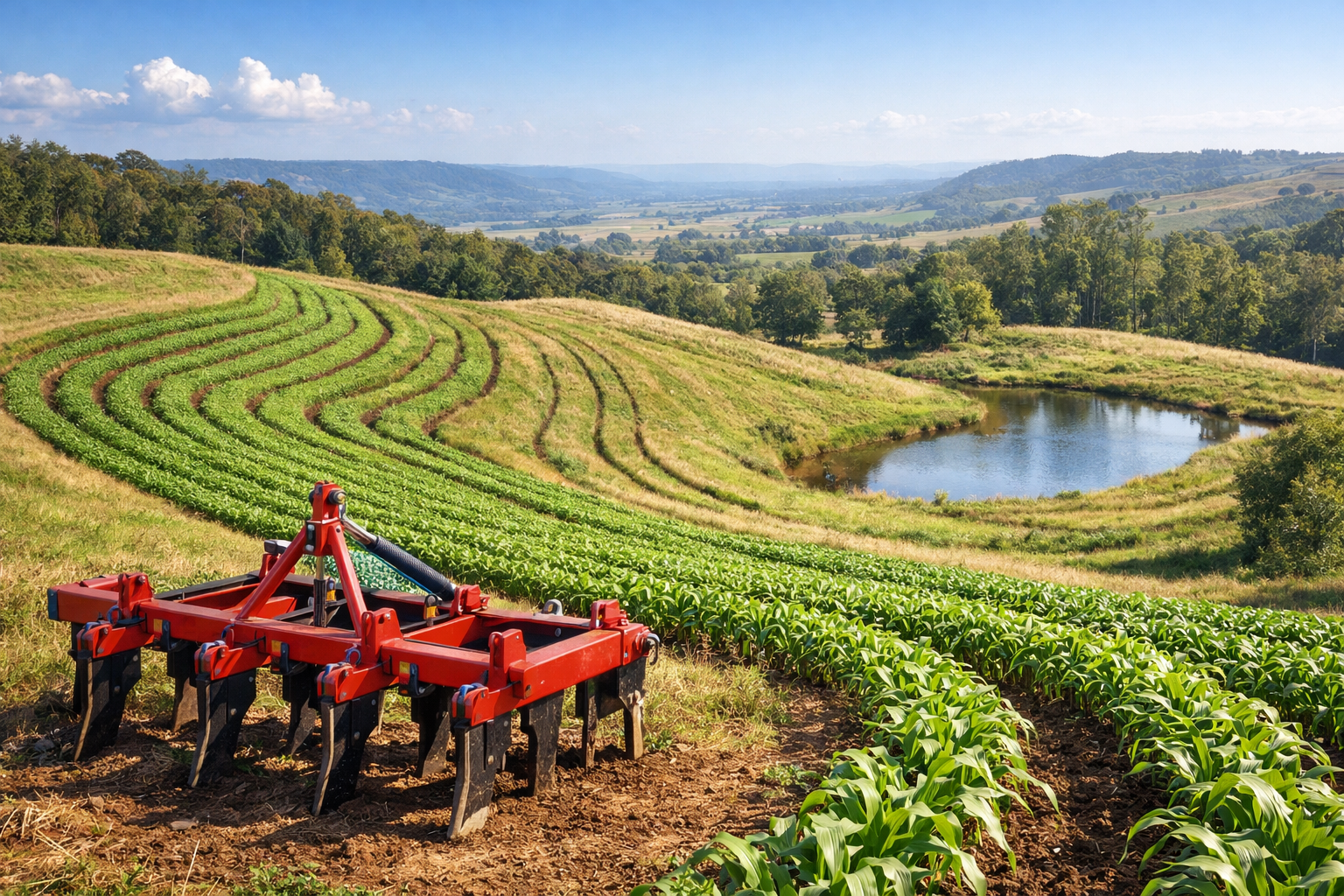
Keyline design offers a powerful way to rethink how water moves across agricultural landscapes. While many farmers are familiar with contour farming, keyline takes things a step further—actively guiding water to improve soil health, increase resilience, and enhance productivity.
A helpful introduction to this approach can be found in Keyline Design Mark IV by Abe Collins and Darren J. Doherty. This resource explains how careful observation of landforms—particularly valleys, ridges, and slope transitions—can inform smarter cultivation patterns. If you’re new to the concept, you can explore the full article here:
At the heart of keyline design is the identification of a “keypoint”—the place in a valley where the slope begins to flatten. From this point, farmers can design cultivation lines that subtly move water away from wetter areas and distribute it more evenly across drier parts of the landscape.
Unlike traditional tillage, which often channels water downhill and increases erosion, keyline cultivation helps slow, spread, and sink water into the soil. This leads to improved moisture retention, reduced runoff, and stronger soil structure over time.
Another important element is the use of tools like the Yeomans plow, which aerates the soil without inverting it. This preserves soil biology while increasing infiltration—key components of regenerative agriculture systems.
Ultimately, keyline design is about working with the natural patterns of the land rather than against them. By aligning farming practices with these patterns, land managers can create more balanced, productive, and sustainable systems.