
California Ag Water Resources aims to raise awareness about approaches to agricultural water management that support the viability of agriculture, conserve water, and protect ecological integrity in California. This website is managed by Community Alliance with Family Farmers.
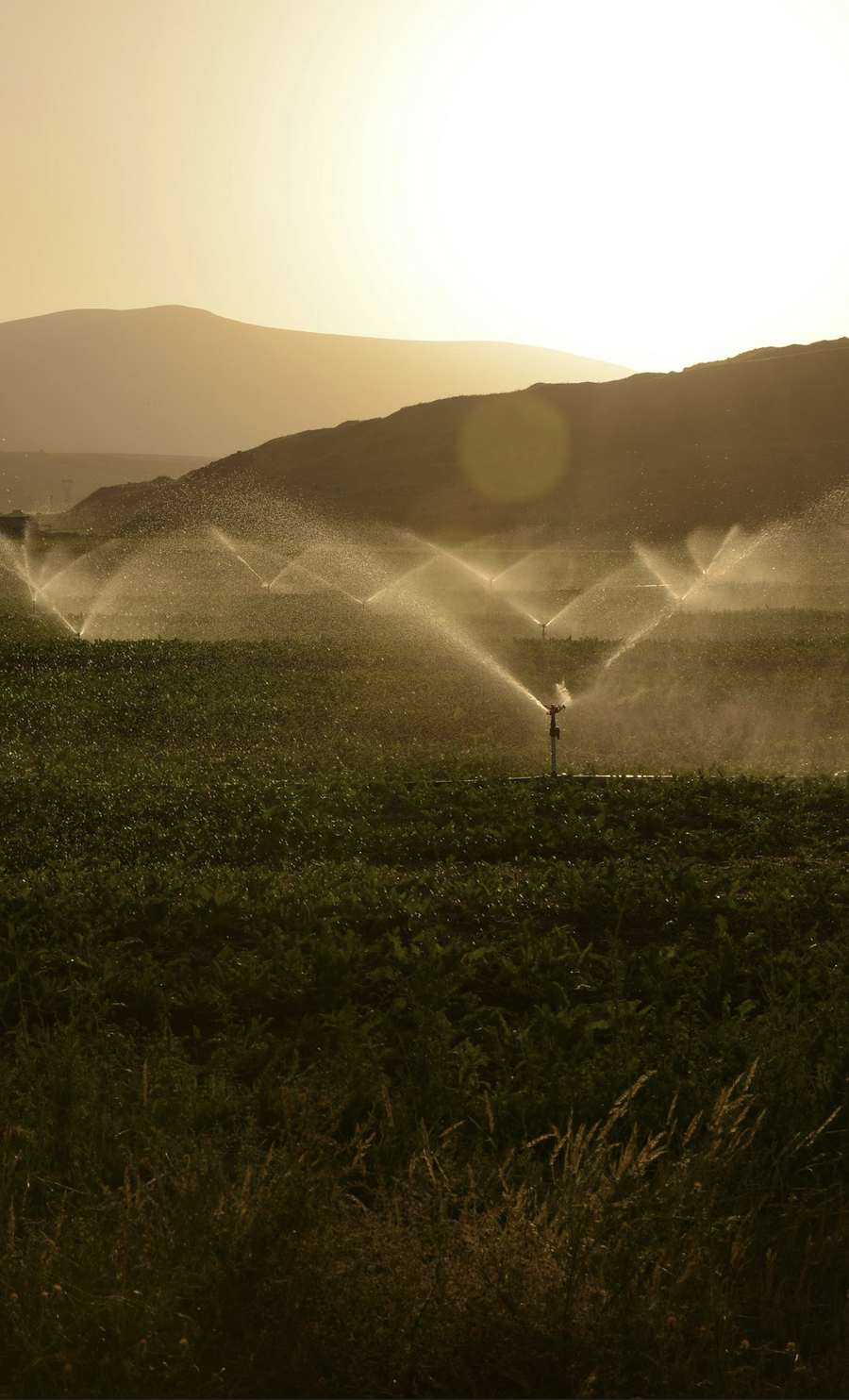


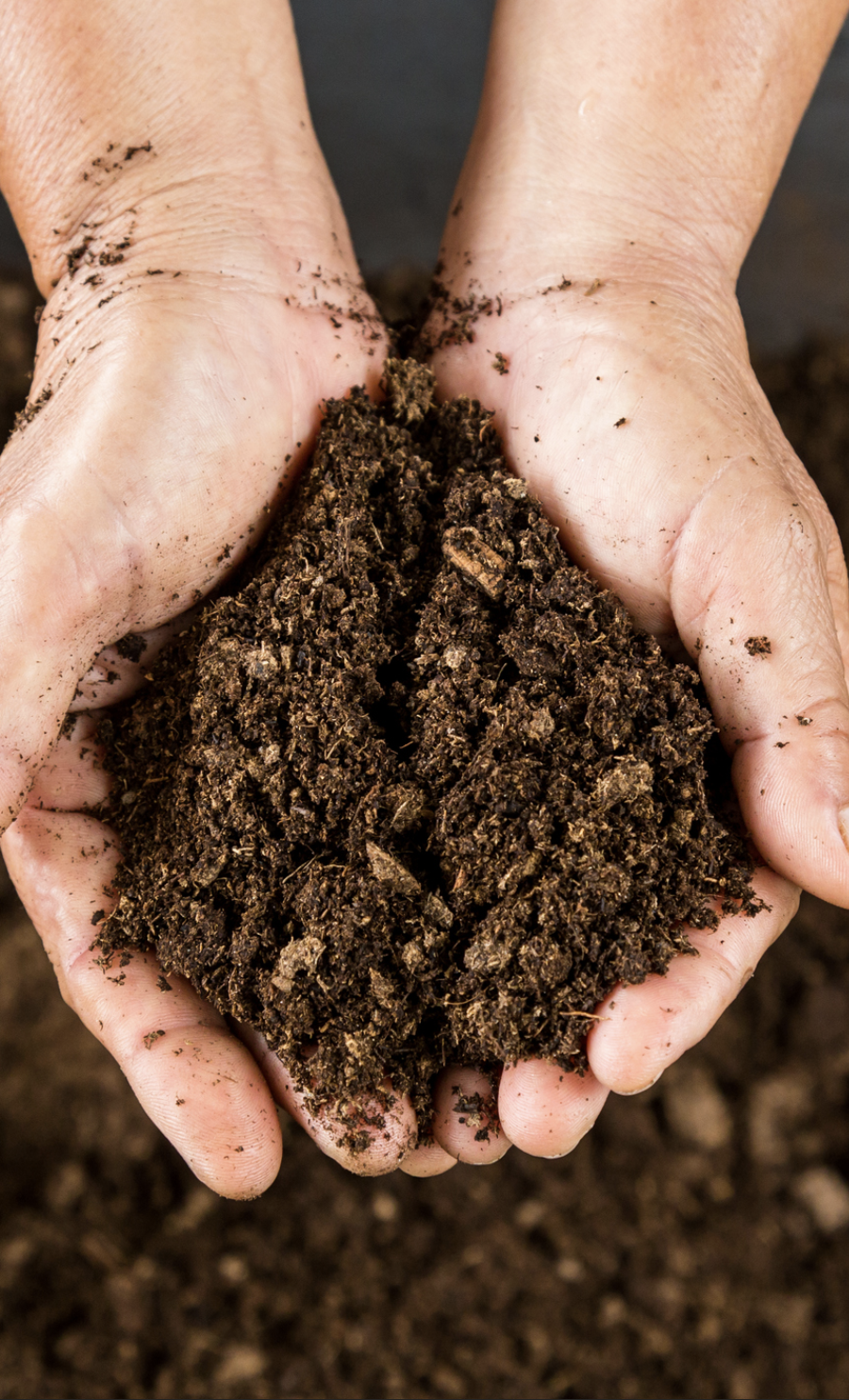
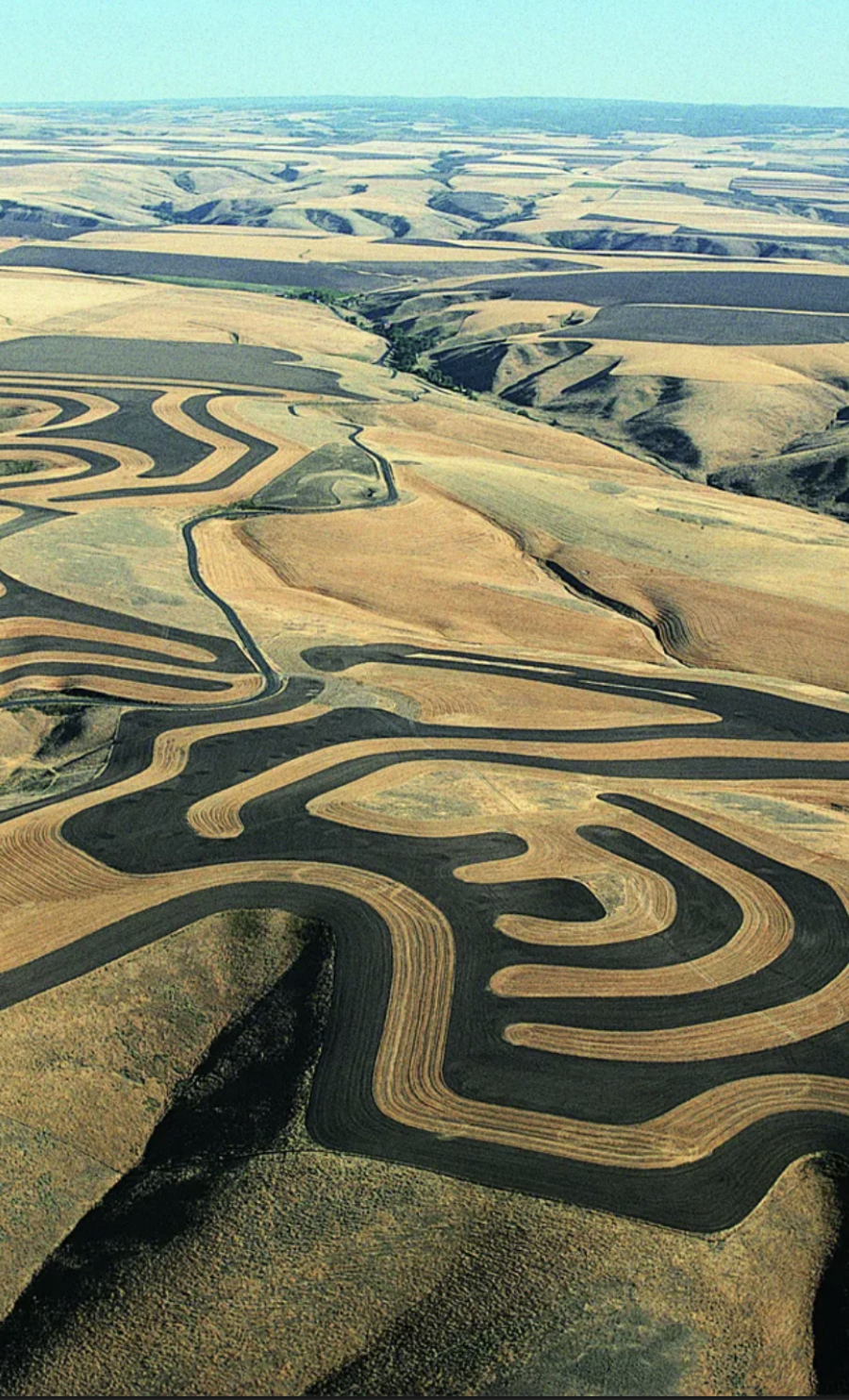


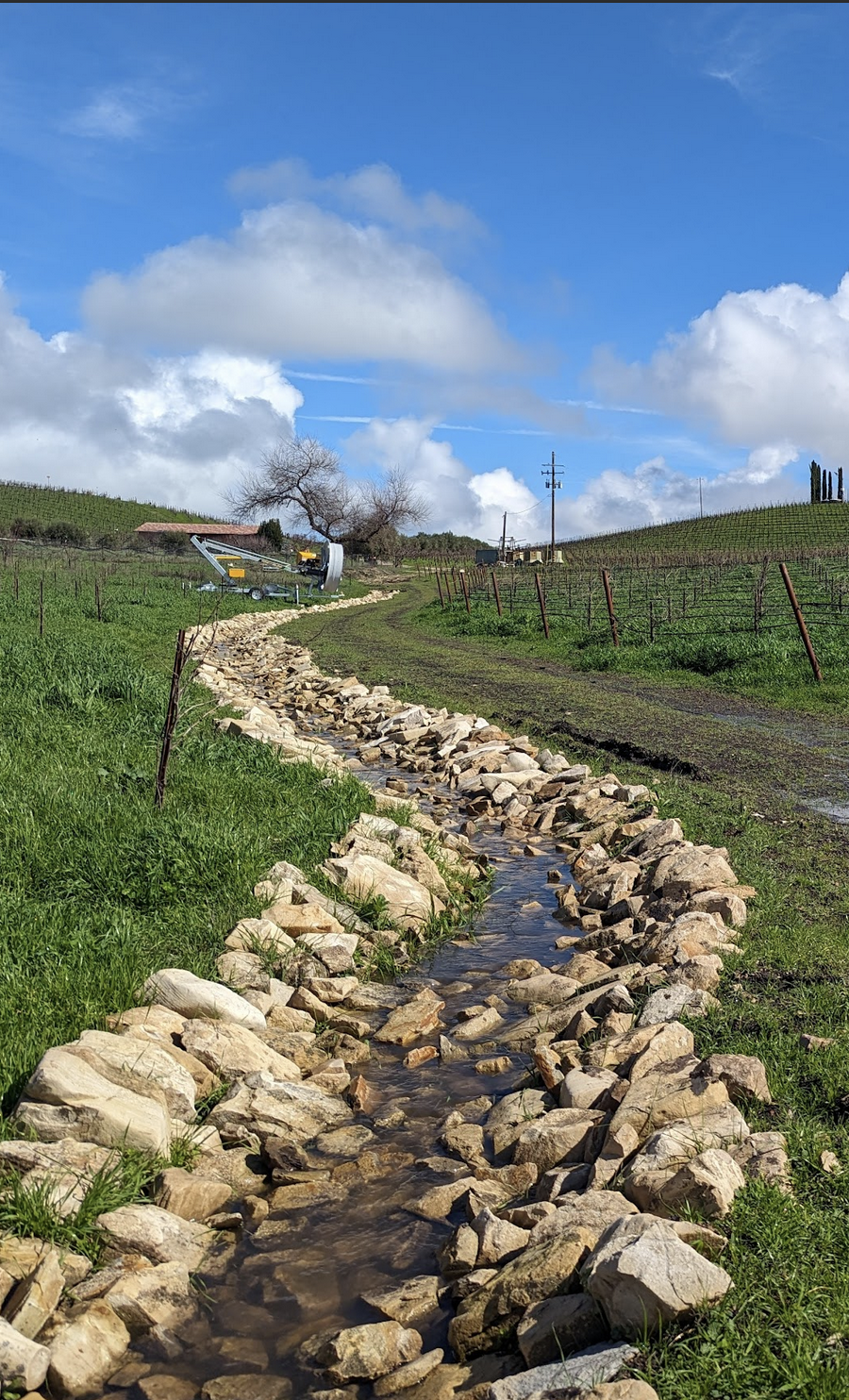

California agriculture has a great opportunity at this time to innovate new solutions, demonstrate leadership in achieving multiple benefits, and forge new partnerships to address these challenges.
Dry Farming on the Cirone Farm
Mike Cirone has not irrigated a single one of the fruit trees on the Cirone Farm for about fifteen years! So how is it that returning customers are still flocking to his stand at the local Farmer’s Market? Well, for the outstanding quality and flavor of his fruits of course! The Cirone’s Pink Lady apples, Fuji apples, sapotes, peaches and apricots are all products of the sustainable “dry farming” technique.

Irrigating an Apple Orchard at Farm Scale
Learn how to irrigate an apple orchard at farm scale with John Vars of Fifth Crow Farm.

Dry Farming: Smith-Madrone Winery
A 2014 video highlighting Smith Madrone Winery and Vineyard’s dry farming practices in St. Helena, CA.

Establishing a Dry Farm Vineyard (2024 Webinar)
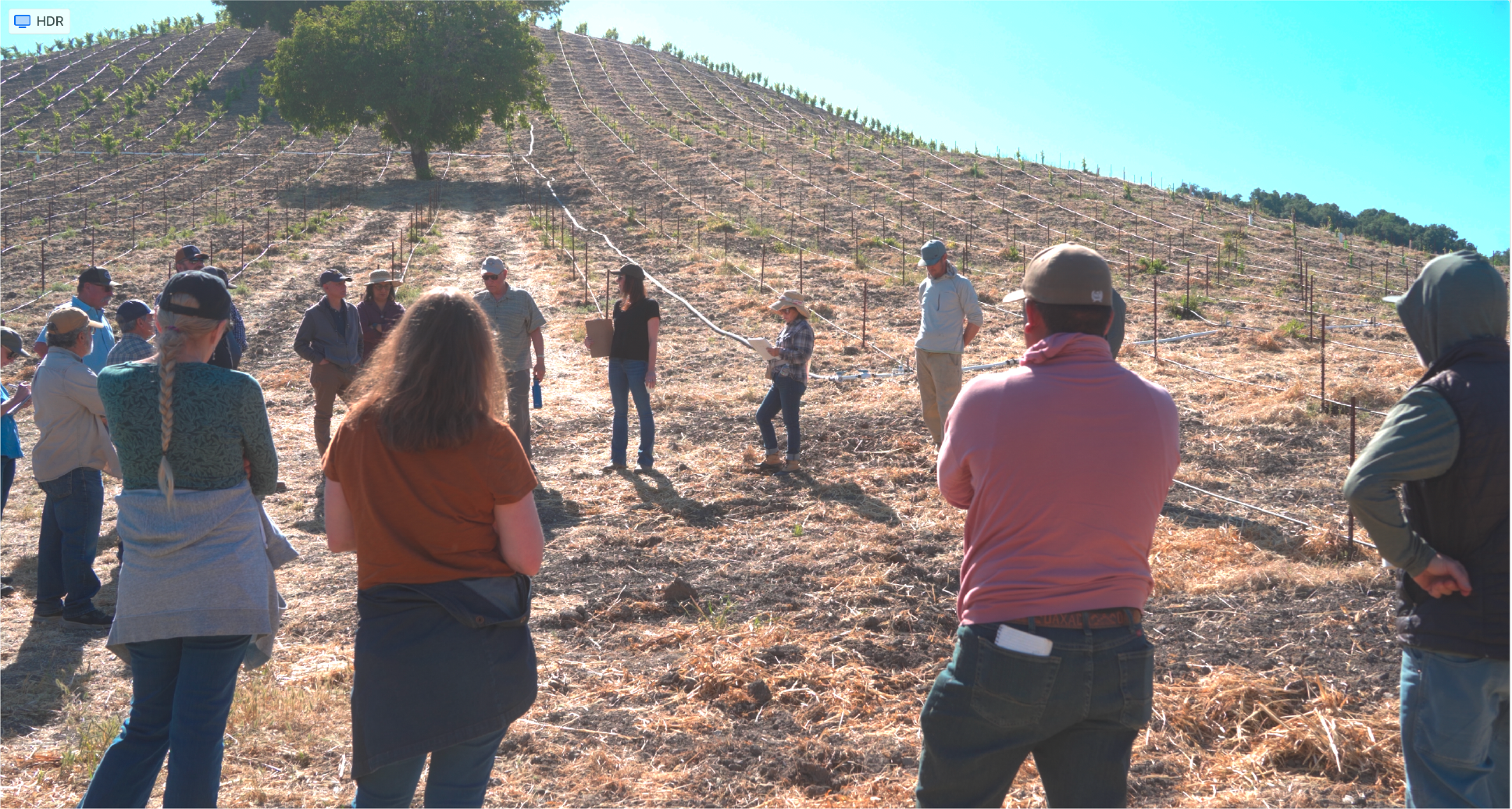
This webinar hosted by California Sustainable Winegrowing Alliance and Community Alliance with Family Farmers is focused on establishing a dry-farmed vineyard in coastal regions. Included is a discussion on rootstock selection, land preparation, vine spacing, planting process and a watering regimen for the first two years of a dry-farmed vineyard. Panelists are Riggs Lokka from Emeritus Vineyards, Jordon Lonborg from Tablas Creek Vineyard, Tod Mostero from Dominus Winery and Rory Williams from Frog’s Leap Winery.

Molino Creek Farm, Grower Video
Joe Curry, farmer and founding member of Molino Creek Farm Collective, uses a water efficient method of raising crops—dry farming—which does not utilize irrigation at all, but instead manages the field’s soil moisture prior to planting. The dry farming method saves on water and produces a smaller, more nutritious and flavor-rich tomato to be sold at market.

Paul Bernier on Dry Farming
The video Paul Bernier on Dry Farming covers considerations and management practices used by Bernier Farms in Sonoma County from a 2017 workshop held by CAFF.

Map of Water Stewardship Case Studies
Do you rely on a well for irrigation or drinking water?
California Ag Water Resources is a compilation of tools and materials to support responsible agricultural water management. The goal of these resources is to enable the continued viability of agriculture in California: supporting farming economies, ensuring quality drinking water, and protecting ecological integrity.

This online resource center, originally the California Ag Water Stewardship Initiative (CAWSI), was first conceived of and launched in 2008 by an alliance of agricultural support organizations including the California Institute for Rural Studies, Community Alliance with Family Farmers, Ecological Farming Association, OAEC Water Institute, Polaris Institute, and Wild Farm Alliance. CAWSI was first convened by the Polaris Institute and then by Ag Innovations Network. CAWSI became a project of the California Roundtable on Water and Food Supply in Fall 2011. In early 2014, management of the CAWSI site was transferred to Community Alliance with Family Farmers. In 2025 the site was updated to be California Ag Water Resources, with a new focus on groundwater given California’s implementation of the Sustainable Groundwater Management Act (SGMA).
CAFF is grateful to the original editorial board and authors: Sonja Brodt (UC Sustainable Agriculture Research and Education Program), Juliet Christian-Smith (Union of Concerned Scientists), Sarge Green (CSU Fresno California Water Institute), Carolyn Cook (California Department of Food and Agriculture), Doug Parker (California Institute for Water Resources), and Dave Runsten (Community Alliance with Family Farmers).
This website is managed by Community Alliance with Family Farmers. Materials on groundwater are developed with the UC Ag and Natural Resources Small Farms SGMA Team and the UC Davis Small Farmer Legal Clinic. All three work together with the Underrepresented Communities, California Tribes, and Small Farmers Groundwater Technical Assistance Program from the Department of Water Resources.
The Resource Center has been made possible by the generous support of the Columbia Foundation, Gaia Fund, Clif Bar Family Foundation, the USDA Risk Management Agency, and the California Water Foundation. The Resource Center is currently funded, in part, by the California Department of Water Resources.)
Submit Content
The Agricultural Water Stewardship Resource Center is an ongoing work-in-progress and relies on user contributions to stay current and comprehensive. We encourage you to contact us with submissions you would recommend posting on the site. Submissions are reviewed periodically by the Editorial Board to ensure accuracy and relevance before being posted.