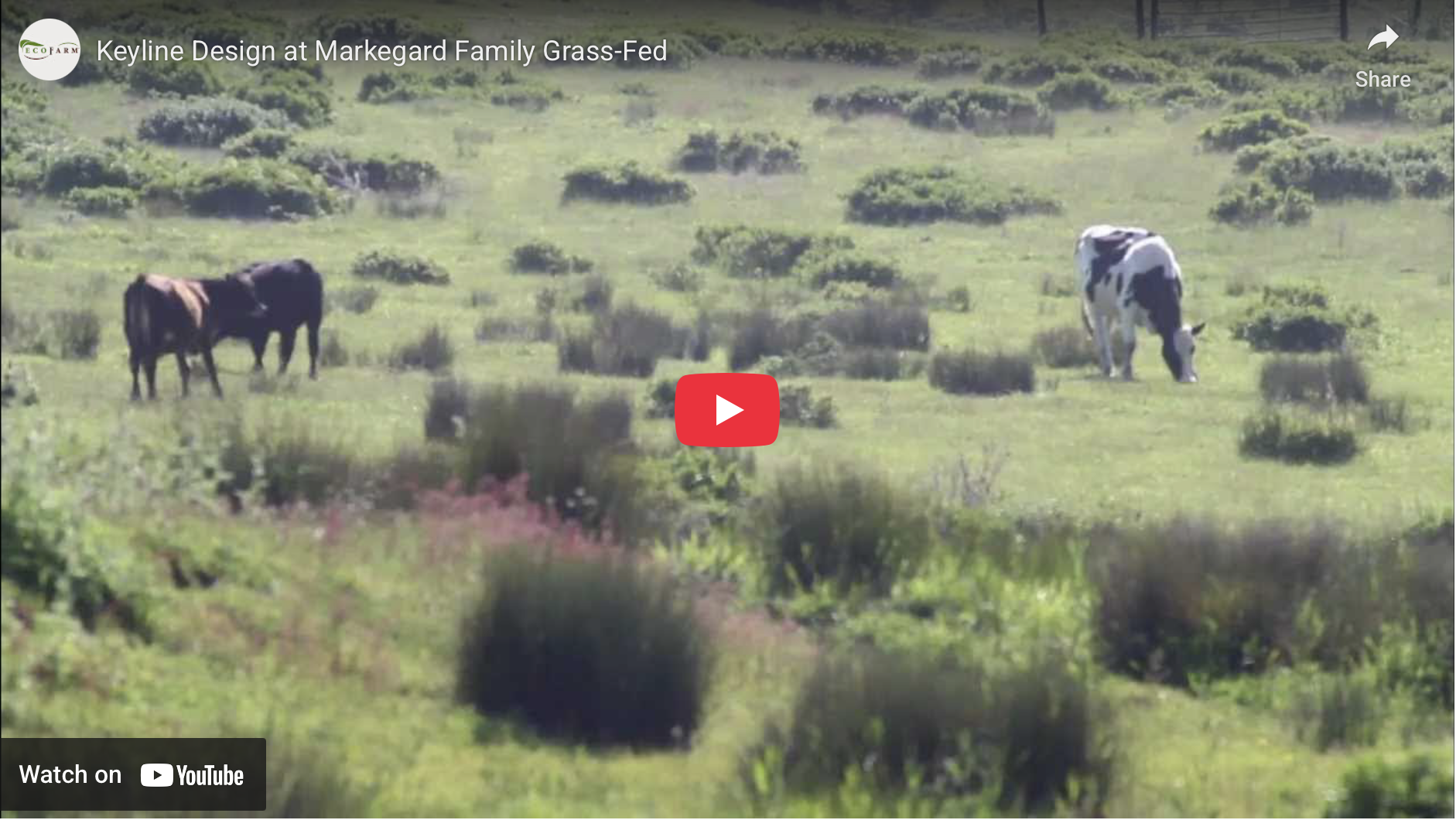
Keyline in Action: Markegard Family Grass-Fed Ranch
Keyline design becomes especially powerful when seen in real-world application—and the work of Markegard Family Grass-Fed in Half Moon Bay offers a compelling example of what’s possible.
Featured in the Ecological Farming Association’s Water Stewardship video series, their ranch demonstrates how keyline strategies can transform land management in practical, measurable ways.
At its core, the Markegard approach focuses on working with the natural contours of the land to improve how water moves across their ranch. By implementing keyline cultivation and thoughtful land design, they are able to slow, spread, and absorb water more effectively.
This leads to several important benefits.
First, improved water infiltration supports stronger soil health. As moisture is held in the soil longer, biological activity increases and soil structure improves. This directly contributes to increased forage production—an essential factor for livestock operations.
Second, better water distribution reduces runoff and erosion. Instead of losing valuable topsoil and nutrients during heavy rains, the land retains and utilizes those resources more efficiently.
Another notable outcome is reduced reliance on external inputs, including energy. With more effective natural water management, the ranch is able to save electricity that would otherwise be used for pumping or irrigation.
The Markegard Family’s work highlights a key principle of regenerative agriculture: small changes in land design can lead to significant, compounding benefits over time.
By aligning their practices with the natural flow of water, they’ve created a system that is more productive, resilient, and environmentally sound.
You can learn more here: