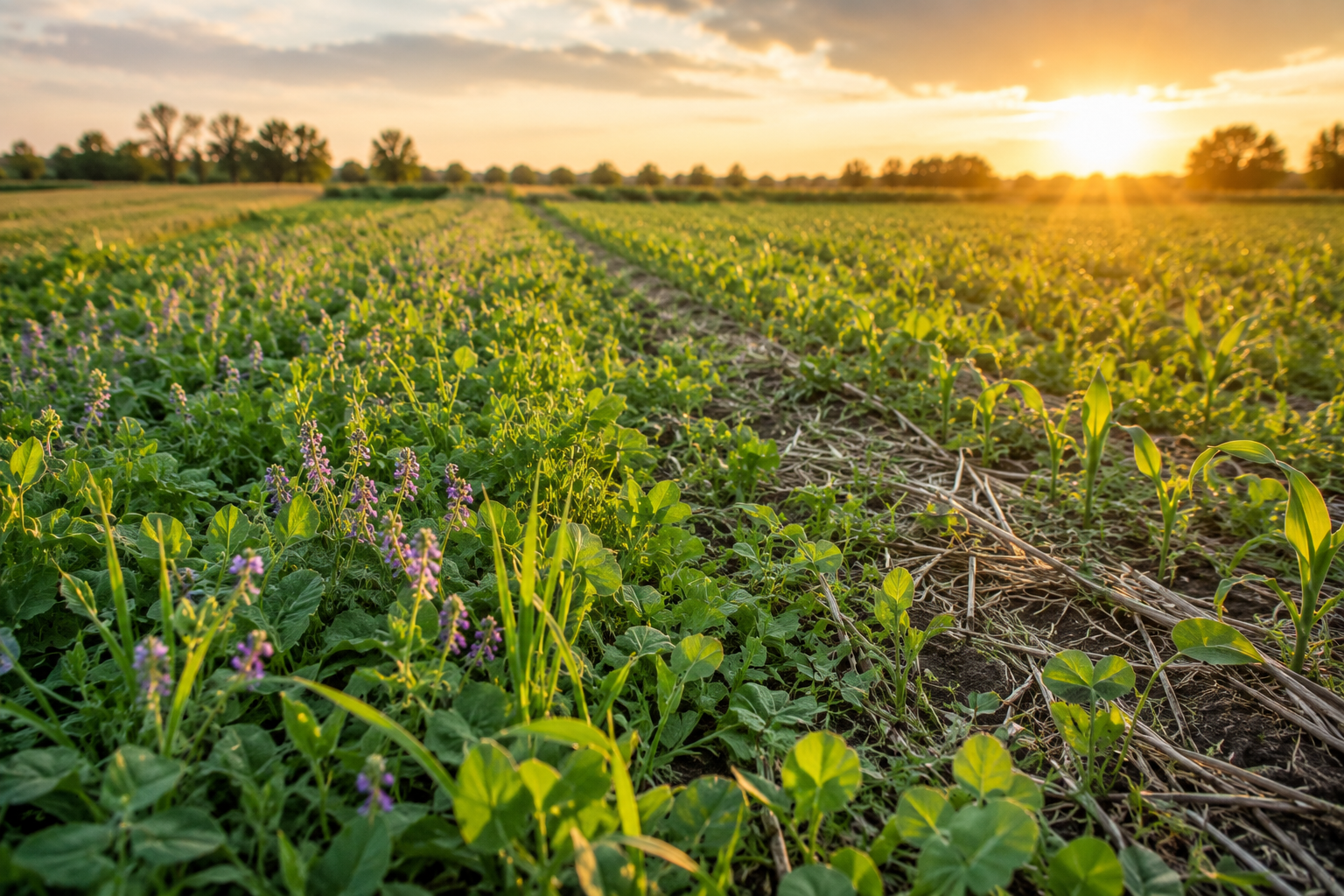
Healthy soil is the foundation of sustainable agriculture, and cover crops continue to be one of the most effective ways farmers can improve soil health naturally. The USDA’s Sustainable Agriculture Research and Education (SARE) program has spent decades supporting research and education focused on the benefits of cover crops, creating a valuable collection of resources for farmers, gardeners, and land stewards alike.
Cover crops are plants grown primarily to benefit the soil rather than for harvest. They are often planted between growing seasons to protect and enrich the land. Depending on the species used, cover crops can reduce erosion, improve soil structure, suppress weeds, retain moisture, increase organic matter, and even naturally add nutrients like nitrogen back into the soil.
One of the greatest advantages of cover cropping is its ability to improve long-term soil resilience. Healthy soils with strong biological activity are better able to retain water during drought conditions while also reducing runoff during heavy rainfall. This makes cover crops an important tool not only for productivity, but also for climate resilience and water conservation.
The educational materials assembled through USDA SARE provide practical guidance based on years of real-world research and field experience. Farmers can learn how to select the right cover crop species, understand planting and termination methods, and integrate cover crops into a variety of farming systems.
As more growers explore regenerative and climate-smart agriculture practices, cover crops continue to gain attention as a simple but highly effective solution for improving soil health naturally.
Whether you manage a backyard garden or large-scale farmland, investing in healthier soil today helps create stronger crops, healthier ecosystems, and more sustainable food systems for the future.