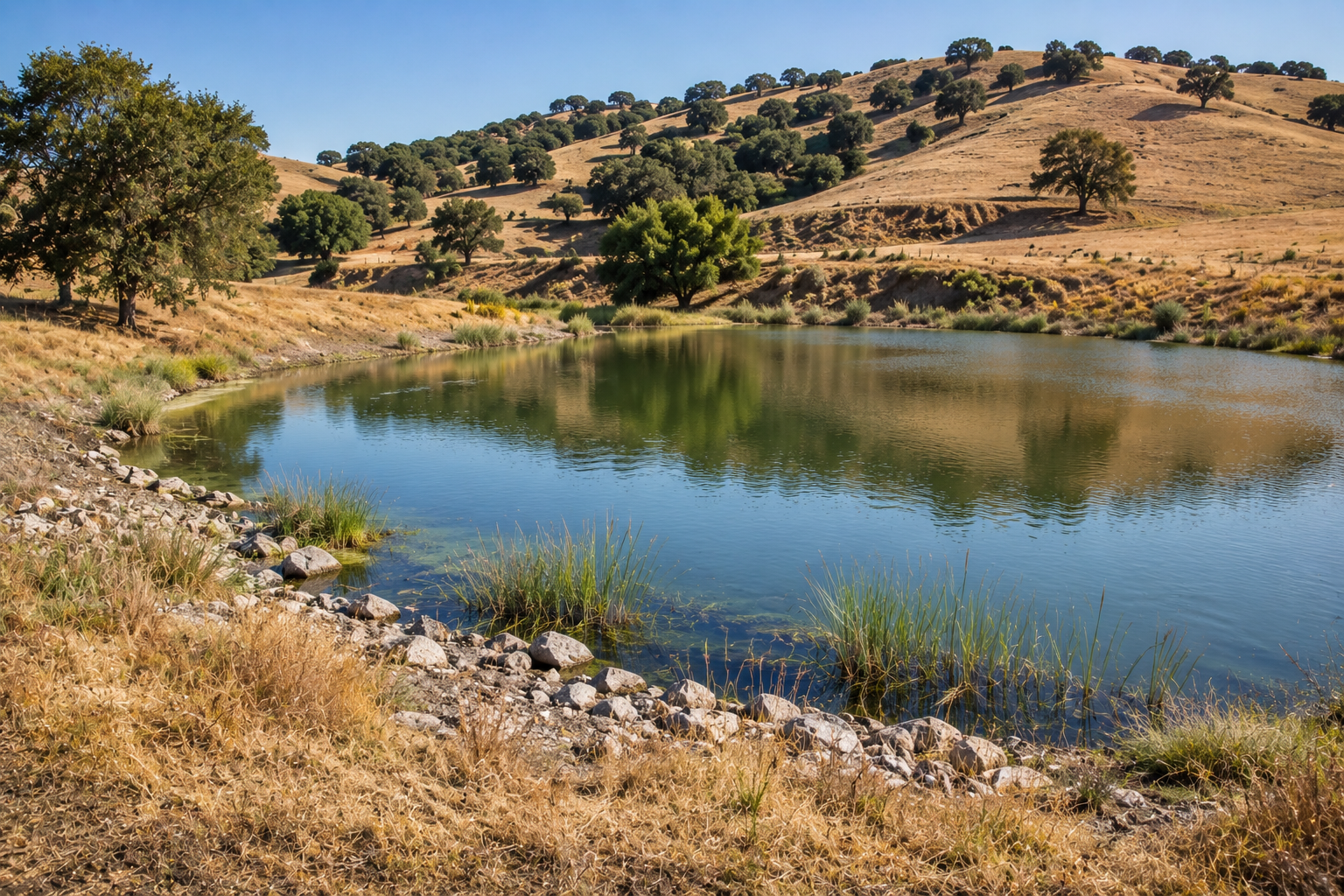
Hill ponds have long played an important role in supporting agriculture, livestock operations, wildlife habitat, and water conservation across rural landscapes. These small reservoirs, often built in upland or rolling terrain, can provide valuable water storage while also improving the ecological health and resilience of working lands. The Yolo County Resource Conservation District’s Hill Ponds article offers practical guidance for landowners interested in constructing, maintaining, or improving hill ponds on their property.
The resource explains that properly designed hill ponds can serve multiple functions, including providing water for livestock, irrigation support, fire protection, erosion control, groundwater recharge, and habitat creation for birds, amphibians, pollinators, and other wildlife species. In many rural areas, hill ponds also contribute to drought resilience by helping capture and store seasonal rainfall and runoff.
The article covers important considerations for hill pond construction, including site selection, watershed characteristics, soil conditions, permitting requirements, and engineering needs. Careful planning is essential to ensure ponds function efficiently while minimizing erosion, seepage, and sediment buildup over time.
Maintenance is another key topic addressed in the guide. Regular inspection of dams, spillways, vegetation, and sediment levels helps preserve pond stability and water quality. Proper vegetation management around ponds can also improve habitat value while reducing erosion and protecting nearby waterways.
In addition to technical guidance, the article highlights opportunities for landowners to receive assistance and support through conservation organizations and resource agencies. These partnerships can help make pond projects more accessible while encouraging sustainable land stewardship practices.
As water conservation and habitat restoration become increasingly important across California and other drought-prone regions, hill ponds continue serving as valuable tools for balancing agricultural productivity with environmental sustainability.