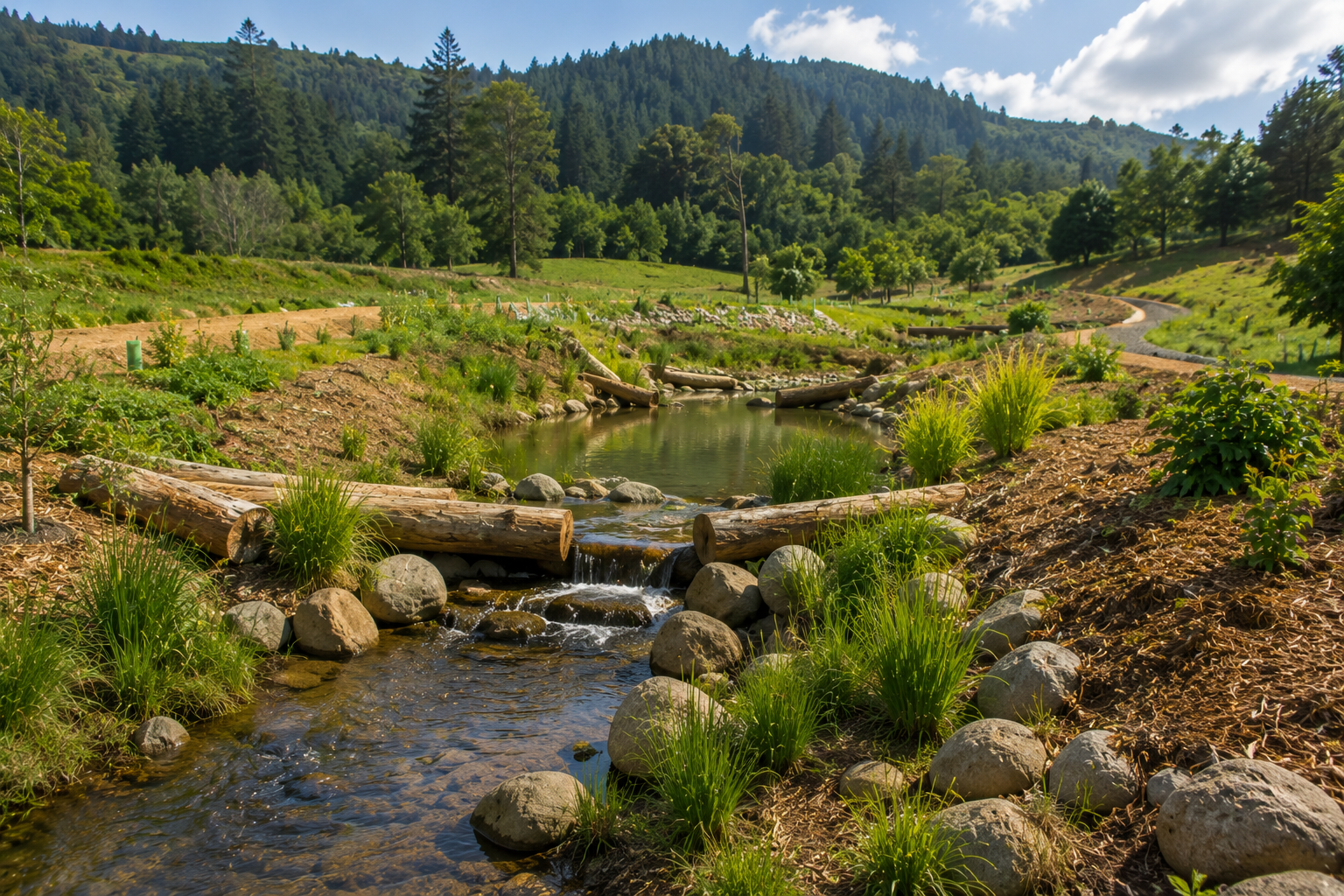
As climate challenges continue to affect water availability and ecosystem health, innovative stormwater management strategies are becoming increasingly important for rural landowners and agricultural communities. A case study from the Occidental Arts and Ecology Center highlights how Integrated Stormwater Retention Systems (ISRS) can improve both water quantity and water quality through thoughtful land stewardship and ecological design.
The project focused on two primary goals: increasing well water production and improving the health of a nearby salmon-bearing creek. Rather than allowing rainwater to quickly run off the landscape, the system was designed to slow, capture, and infiltrate stormwater back into the ground. This approach helps recharge groundwater supplies while reducing erosion and sediment movement into local waterways.
Healthy groundwater recharge is critical for maintaining reliable well water, especially during dry seasons and drought conditions. By allowing rainwater to soak naturally into the soil, stormwater retention systems help restore underground aquifers and improve long-term water resilience for farms and rural properties.
Protecting water quality is equally important. Fast-moving runoff can carry sediment, nutrients, and pollutants into streams and creeks, negatively impacting fish habitat and aquatic ecosystems. In this case, improving the nearby salmonid-bearing creek was a major priority. Slowing stormwater movement helps filter pollutants naturally through soil and vegetation before water reaches sensitive waterways.
Integrated stormwater systems often include features such as swales, retention basins, ponds, contouring, and native vegetation plantings. These practices not only support water conservation but also improve biodiversity and landscape health overall.
The Occidental Arts and Ecology Center’s work demonstrates how ecological water management can benefit both people and the environment. Thoughtful stormwater retention strategies create healthier landscapes, more reliable water resources, and stronger ecosystems for future generations.