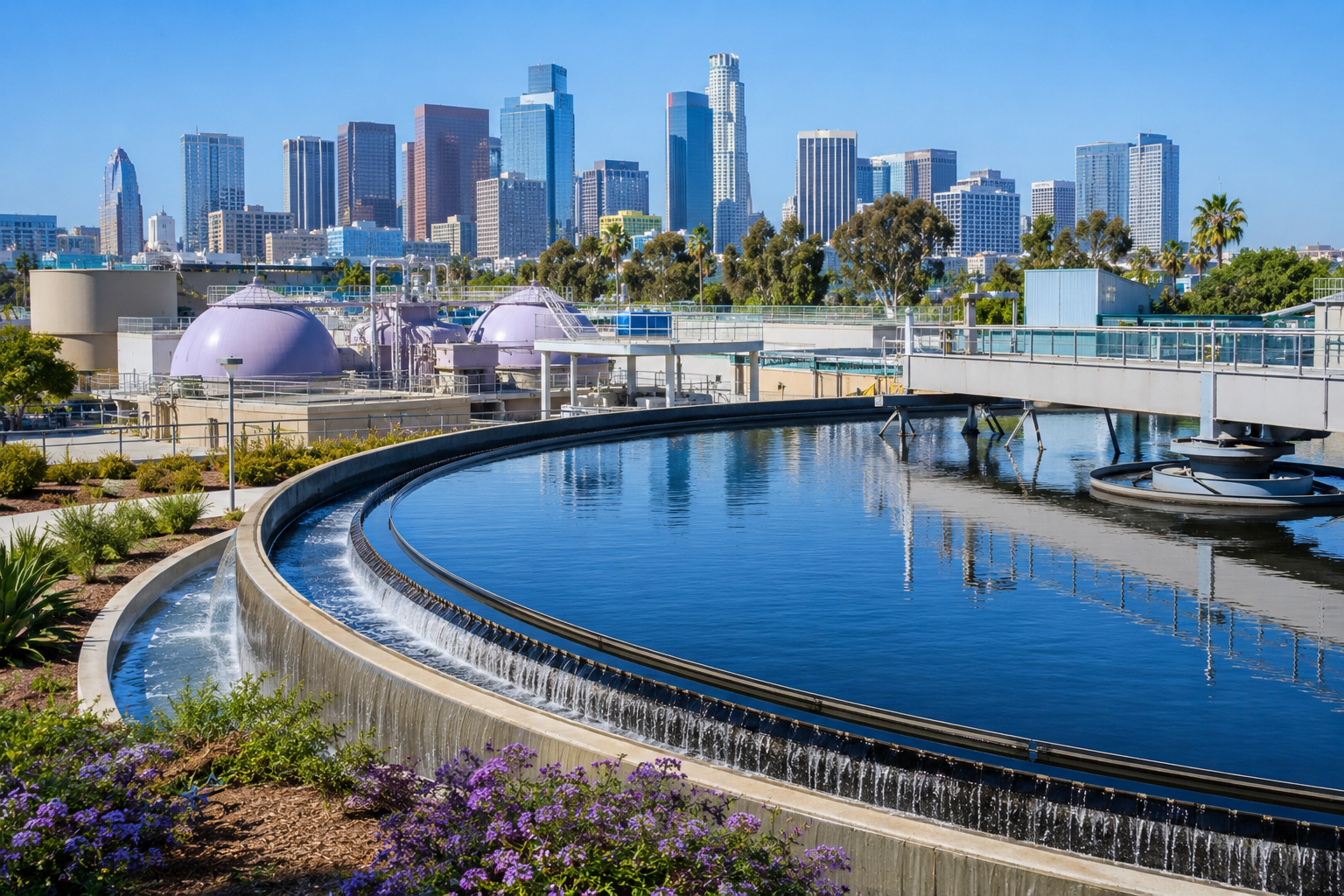
As California continues to face growing water challenges, cities across the state are investing in innovative solutions to secure a more sustainable future. One of the most ambitious efforts underway is the City of Los Angeles Gray Water and recycled water initiative, designed to dramatically expand water reuse and reduce dependence on imported water supplies.
The City of Los Angeles has established a long-term goal of producing up to 59,000 acre-feet per year (AFY) of recycled water by 2035. This recycled water will support non-potable uses such as landscape irrigation, industrial applications, and groundwater replenishment. By reusing treated wastewater instead of discharging it into the ocean, Los Angeles is working toward a more resilient and environmentally responsible water system.
Gray water and recycled water projects offer multiple benefits. First, they help conserve valuable drinking water supplies by redirecting treated water to applications that do not require potable-quality water. This can significantly reduce strain on reservoirs, aqueducts, and imported water sources, especially during periods of drought.
Second, groundwater replenishment projects help restore underground aquifers that serve as critical emergency water reserves for Southern California communities. Recharging these aquifers strengthens long-term water security while helping combat issues related to over-pumping and land subsidence.
The initiative also supports broader environmental goals. Reducing wastewater discharge into the Pacific Ocean helps protect marine ecosystems while maximizing the usefulness of every drop of water the city processes. As climate variability continues to impact California’s water future, large-scale recycled water systems may become an essential part of urban sustainability planning.
Los Angeles is demonstrating how cities can rethink wastewater not as waste, but as a valuable resource that can be reused, recycled, and reintegrated into the local water supply system for generations to come.