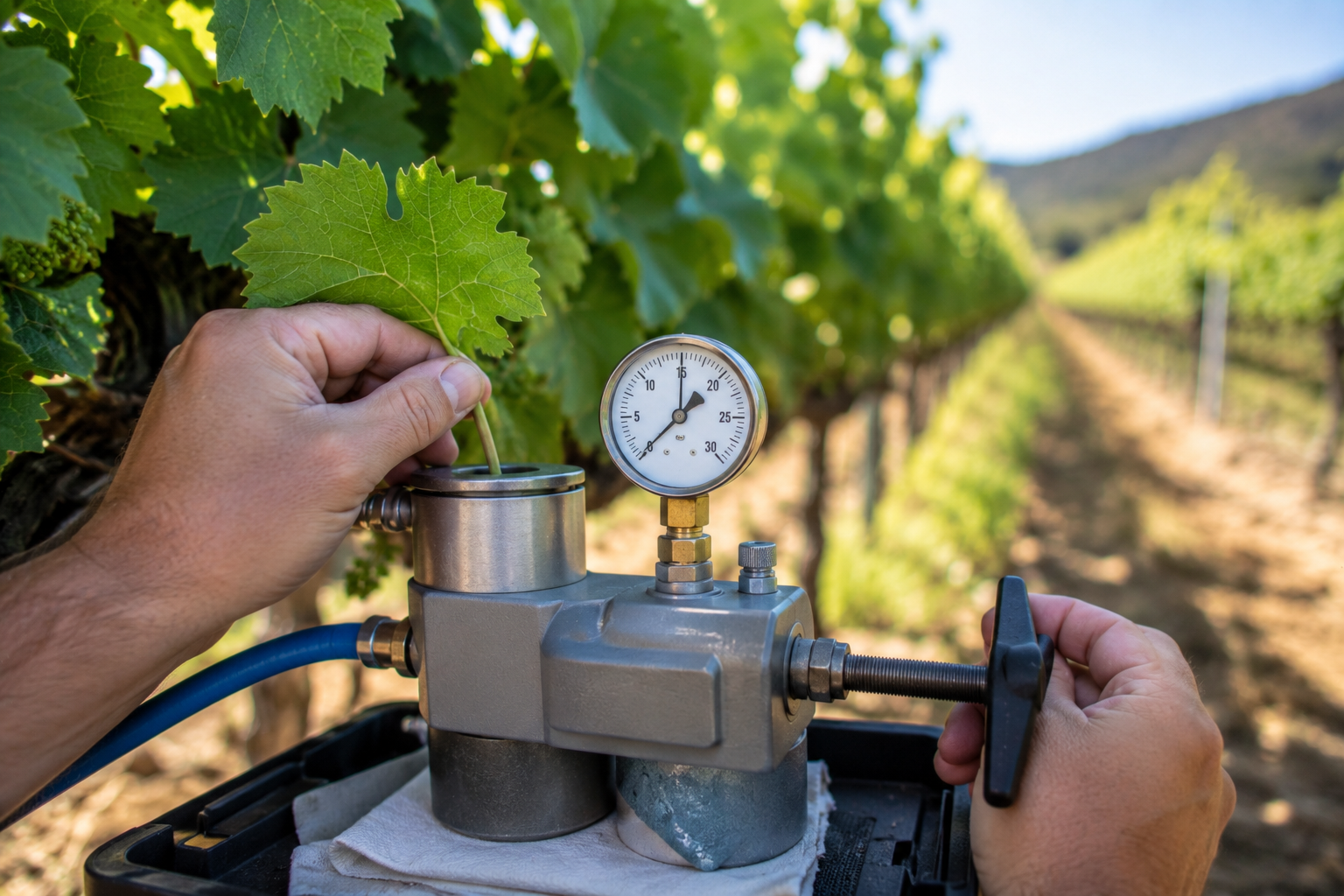
Understanding vine stress is essential for making precise irrigation decisions in vineyards. A practical worksheet from University of California Cooperative Extension introduces growers to the use of a pressure chamber, often called a “pressure bomb,” to measure plant water status with accuracy.
The pressure chamber is a field tool used to measure leaf water potential and stem water potential—key indicators of how much stress a vine is experiencing. By placing a leaf or stem sample inside the chamber and applying pressure, growers can determine how tightly water is held within the plant. This measurement reflects how hard the vine is working to access water from the soil.
These readings provide valuable insight into irrigation timing. Rather than relying solely on soil moisture or visual cues, growers can directly assess the vine’s condition. This allows for more precise water management, helping avoid both under- and over-irrigation.
The UCCE worksheet includes reference values that help interpret different stress levels. For example, moderate stress may be desirable at certain stages of grape development to improve fruit quality, while excessive stress can reduce yield and harm vine health. Understanding these thresholds is critical for balancing production goals with plant health.
Using a pressure chamber does require training and consistency, but it offers one of the most accurate methods for assessing vine water status. When combined with other tools like soil moisture sensors and weather data, it becomes part of a comprehensive irrigation strategy.
As water resources become more limited, precision tools like the pressure chamber are increasingly important. They help vineyard managers make informed decisions that support both efficiency and high-quality grape production.