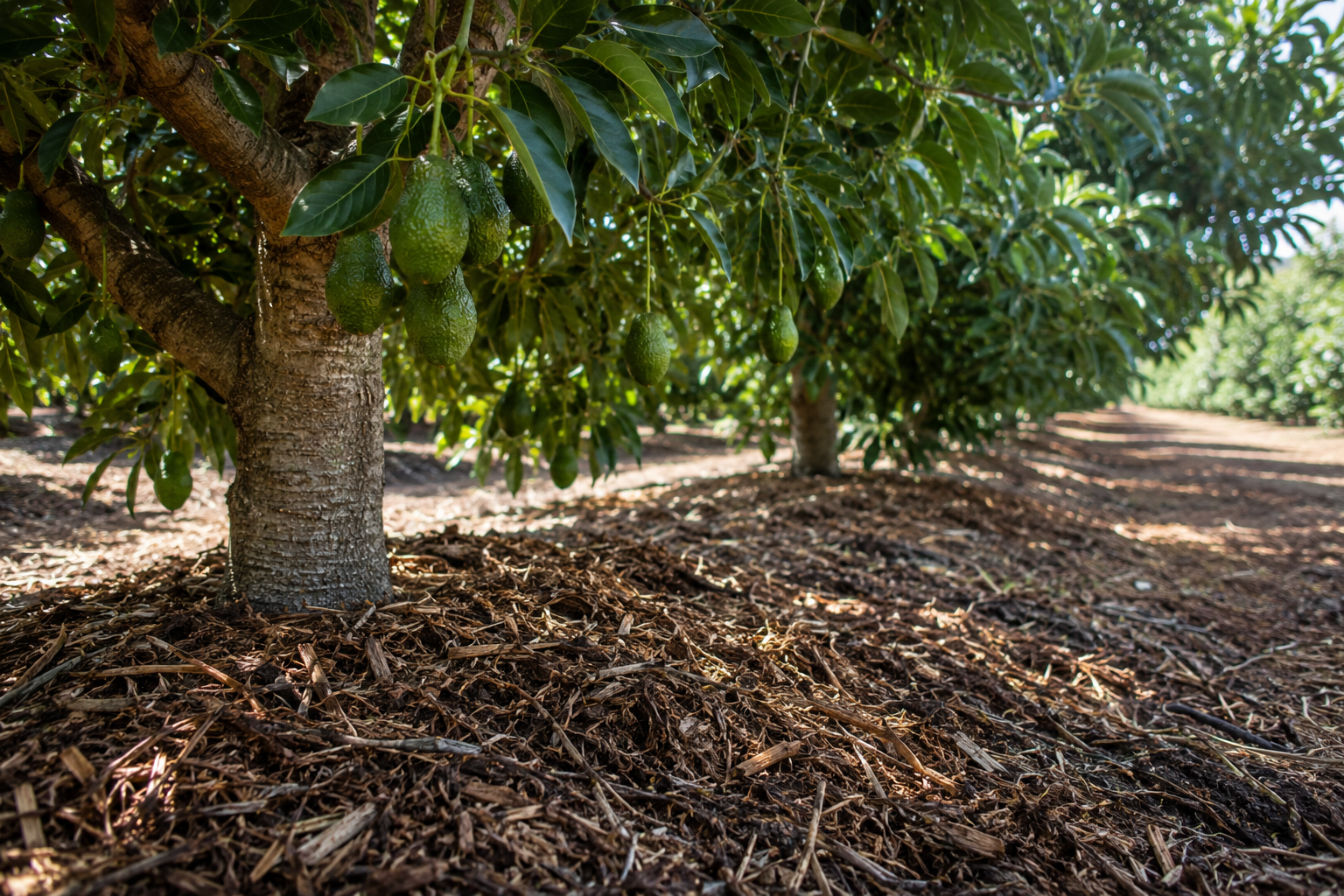
Healthy soil is essential for growing strong, resilient crops, and one of the simplest ways to improve soil conditions naturally is through mulching. At Hilltop & Canyon Farms, the Abbott Family has embraced this practice across their 50 acres of avocado trees by using a coarse mulch blend of wood chips, horse manure, and municipal green waste to better mimic the avocado’s native growing environment.
This thoughtful soil management strategy provides a wide range of benefits for both the trees and the surrounding ecosystem. Mulch helps retain soil moisture by reducing evaporation from the soil surface, which is especially important in regions facing water scarcity and drought conditions. By keeping the soil cooler and more consistently moist, avocado trees are better able to thrive even during hot weather.
In addition to conserving water, mulching also helps reduce erosion by protecting bare soil from wind and rain. Organic mulch acts as a protective layer that stabilizes the soil while slowly breaking down and feeding beneficial microorganisms below the surface. Over time, this improves soil structure, increases organic matter, and supports healthier root systems.
The Abbott Family’s mulching practices also contribute to disease prevention by creating healthier soil conditions that support balanced microbial activity. Using recycled organic materials such as municipal green waste and manure further demonstrates how agricultural systems can repurpose resources in sustainable and environmentally beneficial ways.
As more growers look for climate-friendly and regenerative farming solutions, mulching continues to stand out as a practical and effective strategy for improving long-term soil health and water efficiency.
Healthy soils create healthier farms, stronger crops, and more resilient agricultural systems—and sometimes the simplest solutions can have the biggest impact.