Dry Farming
On this page: Growers Video | Benefits | Considerations | Featured Resources
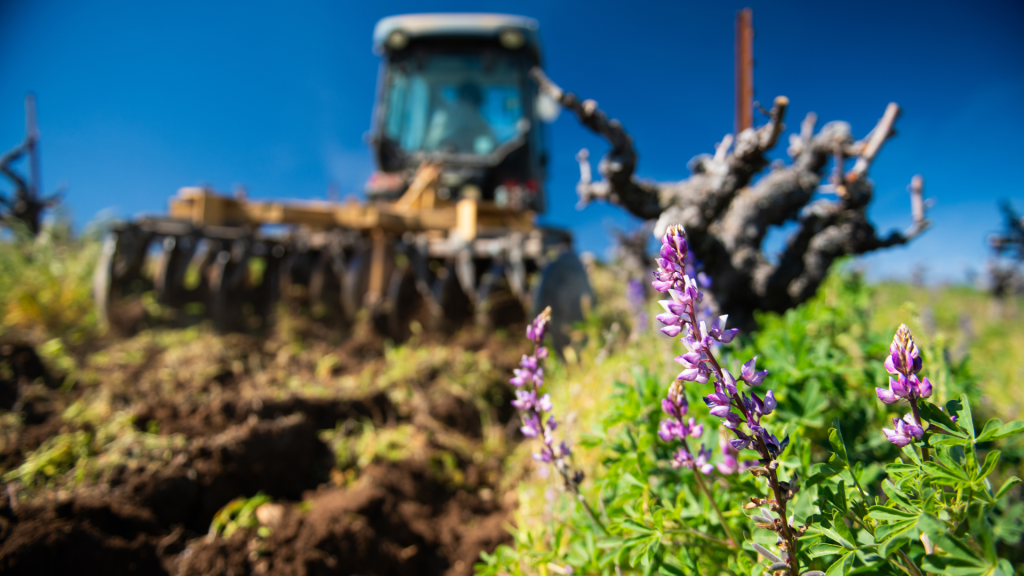
Dry farming is more than just the absence of irrigation; it is a systems approach that maximizes effective rainfall in the winter while reducing evaporation in the summer. It includes stormwater management to capture winter rains in the soil profile. It typically includes soil tillage techniques to reduce evaporation during the dry season.
As farmers face changing temperatures and limited water supplies, there is renewed interest in dry farming techniques in a modern context.
While people typically think of old vine zinfandel or century old walnut trees when they think of dry farming, it’s important to recognize that farmers successfully dry farm in a variety of current conditions.
In the Mediterranean region, olives and grapes have been dry farmed for thousands of years. Even today, vast swaths of Spain, Greece, France, and Italy dry farm these crops. In some regions of Europe, it is illegal to irrigate wine grapes during the growing season.
California has dry-farmed vineyards from Mendocino to Santa Barbara counties. Inland, there are dry-farmed vineyards in Lodi and the Sierra foothills. In addition to wine grapes and olives, a wide range of crops including tomatoes, pumpkins, watermelons, cantaloupes, winter squash, garbanzos, apricots, apples, walnuts, grains, and potatoes are dry farmed in California.
While dry farming is not for every grower or every region, it is a promising system of crop management that offers greater crop security in times of uncertain water supply and can offer a higher-quality product.

“Dry farming is only a little about not irrigating. It is much more about learning how to farm if you aren’t going to irrigate.”
John Williams, Frog’s Leap Winery
Benefits
Permanent crop dry farmers always comment on the resilience of their systems – their farms are able to withstand more extreme weather conditions without catastrophic consequences. While their neighbors might be replacing a vineyard after 20 years, the dry farm vineyards can remain viable and healthy for much longer.
Obviously eliminating applied irrigation results in on farm water savings. The UC Davis cost of production studies of typical California crops project the following volumes of irrigation water applied to the crop during a growing season:
- 2-3 feet for olives in the Sacramento Valley
- 2 feet for potatoes in the Klamath Basin
- 3 feet for bearing apples in the Sierra Foothills
- 1.5 feet for bearing pears in Lake/Mendocino area
- 3 feet for mature green fresh market tomatoes in the San Joaquin Valley
- 1-2 feet for winegrapes on the Central Coast
In addition to on farm water savings, there are other benefits with dry farm systems.
- Cultivation and the elimination of irrigation reduces weed pressure and the related weed management programs.
- Capital costs associated with wells and irrigation infrastructure are eliminated.
- Labor costs associated with irrigation are eliminated.
- Energy costs and impacts for pumping are eliminated.
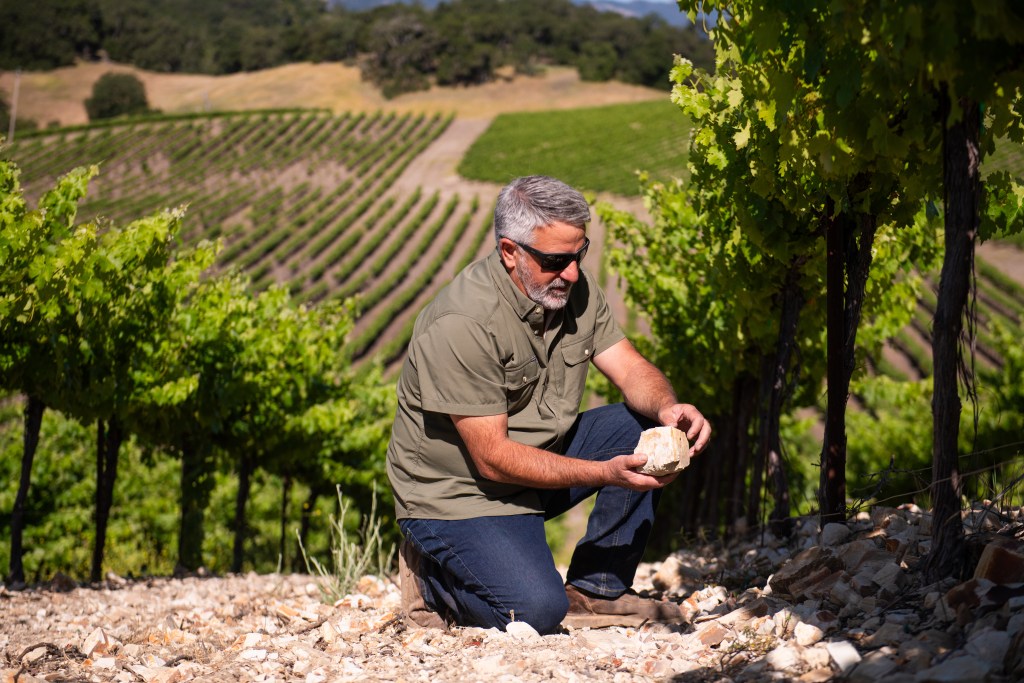
“Dry farming is a soil tillage technique and the art of working the soil, which creates a sponge-like environment to encourage upward movement of water, while sealing the top to prevent evaporation.”
David Little, Sonoma Vegetable Dry Farmer
Considerations
Because dry farming requires a systems approach, to be successful it requires more consideration than turning off the water. That said, there are growers who are redeveloping or converting irrigated fields to dry farm operations. Each situation is unique with its own combination of soil type, soil depth, rainfall, and markets.
While traditional thought suggests that dry farming is limited to areas with 30+ inches of rain, there are examples of 25 year old vineyards that receive only 12 inches of rain. In the more arid climate, deeper soils and wider spacing make this possible.
Wider spacings typically result in lower yields, but it’s important to remember that not all dry farm systems use wider spacings. While people think of dry farm vineyards having 10×10 or 12×12 spacings, newer vineyards are successfully using more dense plantings (9×4.5 for example). Depending on the rootstock and variety, vigor and production can vary greatly. In addition, dry farm systems don’t have the costs associated with irrigated systems. Combined with buyers who prefer dry farm fruit, these systems can be profitable, although some regions with lower price per ton averages may not be feasible.
Because dry farming requires a systems approach, to be successful it requires more consideration than turning off the water. That said, there are growers who are redeveloping or converting irrigated fields to dry farm operations. Each situation is unique with its own combination of soil type, soil depth, rainfall, and markets.

Dry Farm Project
We are pleased to partner with the California Sustainable Winegrowing Alliance (CSWA) on a comprehensive dry farm project involving, research, education, mapping, economics and more. This project is funded by the Department of Water Resources.
Featured Dry Farm Resources
Frank Leeds: Exploring the History and Practice of Dry Farming in Napa Valley (Video)
Produced by Community Alliance with Family Farmers (CAFF), this video features Frank Leeds who describes the history and practice of his extensive dry farm experience in vineyards.
Map of Dry Farm Vineyard Potential
View this map of participating dry farm vineyards and learn about their soils, rainfall, varieties and more.
Dry Farming Vineyards: An Interview with Lauren Leeds Pesch (Podcast)
Dry farming is more than just skipping irrigation—it’s a deliberate practice that starts with soil stewardship. In this podcast, Lauryn Leeds Pesch of Chavez & Leeds Family Vineyards and Leeds & Pesch Vineyard Consulting shares her deep-rooted knowledge in dry farming, a technique that relies solely on stored winter and spring rainfall to meet a…
Can Your Vineyard Soil Hold Enough Water Without Irrigation? (Podcast)
In this podcast, Miguel Garcia, Regenative Agriculture Project Manager at Napa RCD, shares findings from a 15-vineyard study across California’s North Coast. By measuring organic matter, soil respiration, active carbon, and aggregate stability, the project evaluates how soils store and supply water over the growing season.
Dry Farm Research & Education Project (CSWA) (Video)
California Sustainable Winegrowing Alliance – in partnership with Community Alliance with Family Farmers (CAFF) – conducted a dry farming project funded by DWR. The project involved research on soil quality and water movement; map of dry farmed vineyards; economic analysis: and numerous educational resources.
Dry Farm Research & Education Project | Maps, Videos, Guide (CAFF) (Video)
Learn about the science of dry farming, economic analysis, maps, and grower case studies.
Something went wrong. Please refresh the page and/or try again.

Page Photo Credits: Brittany App (Tablas Creek Vineyard, Armory Vineyard, Rolph Vineyard, Adelaida Vineyard)