Photo by Stepan Vrany
Farm Ponds for Irrigation
On this page: Benefits | Resources
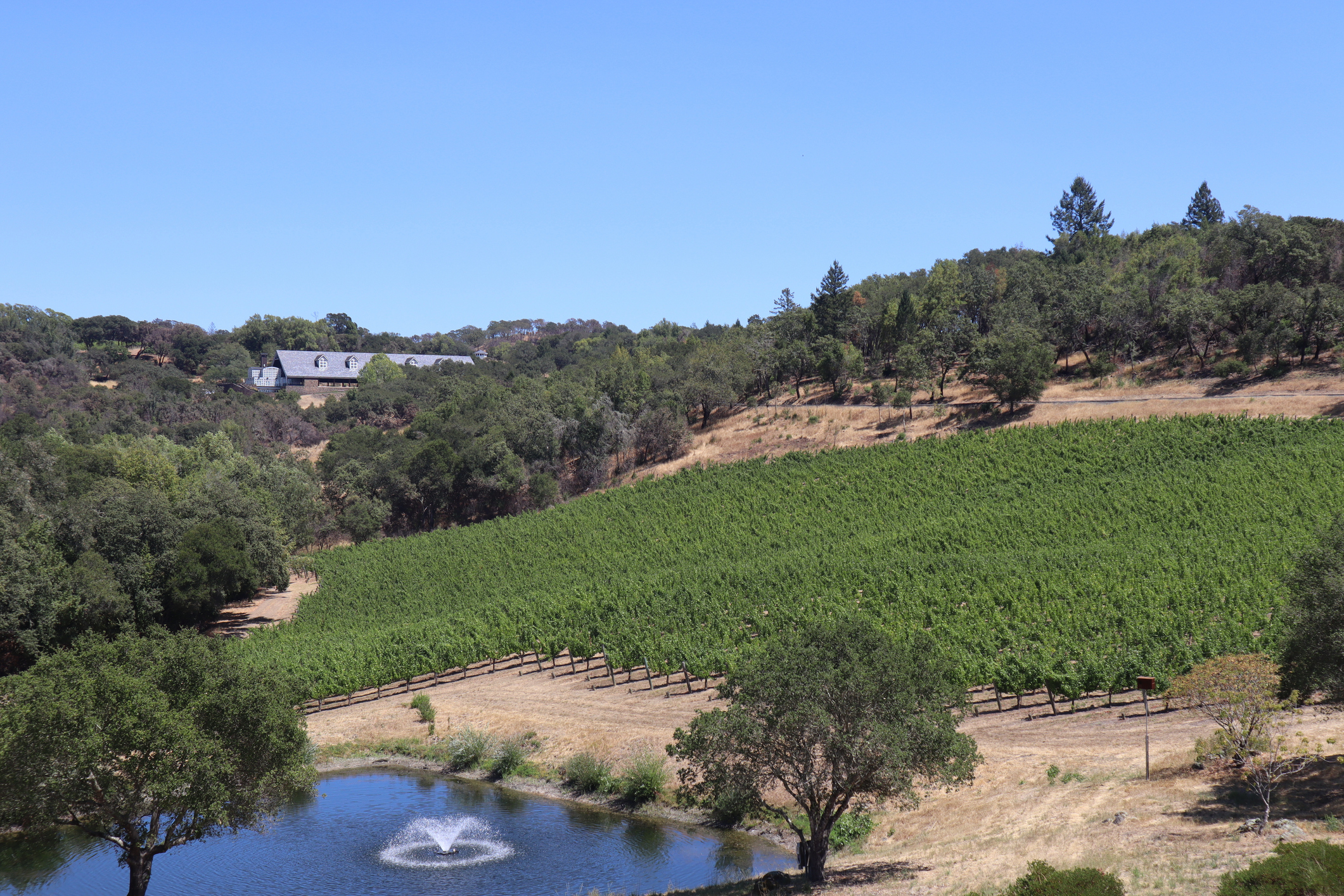
Farm ponds have great potential to improve agricultural water security through the capture, storage, and provision of water for irrigation in all regions of California. Farm ponds can also supply a water source for frost protection, recharge groundwater, and provide a wide range of additional economic and environmental benefits.
Ponds can be filled by rainfall, as is common with farm and ranch ponds that are sited at a low point and serve to collect runoff from higher in the watershed. Alternatively, farm ponds can be filled with tailwater from irrigation, which can then be recycled. Ponds can also be filled by diverting water from streams at peak winter flows, offsetting water withdrawals during the dry season when higher instream flows are needed.
Ponds can recharge groundwater, which keeps more water in the system for longer, providing greater quantities for use in the watershed and allowing seepage into streams later into the summer. Devoting more land to ponds in valleys that are overdrafting groundwater would help minimize impacts and would contribute positively to overall watershed management.
Ponds can also be used to trap, filter, and store tailwater from irrigation. Sediment can be settled and returned to the fields; water can be reused in subsequent irrigations, reducing the need to divert or pump more irrigation water. Pumping from a pond uses much less energy than pumping groundwater. A common approach is to construct a smaller sediment trap that then flows into a pond.
Ponds are common on farms and ranches, however the vast majority of ponds are currently constructed for fish farming, fire protection, stock watering, or simply landscape beautification. Their usefulness as irrigation and watershed management tools have not been sufficiently appreciated or exploited in the West, probably because farmers have largely been able to rely on organized irrigation districts and their reservoirs to store and deliver irrigation water. As water supplies become more uncertain in California, it will behoove farmers and water regulators to make more concerted efforts to institute on-farm ponds.
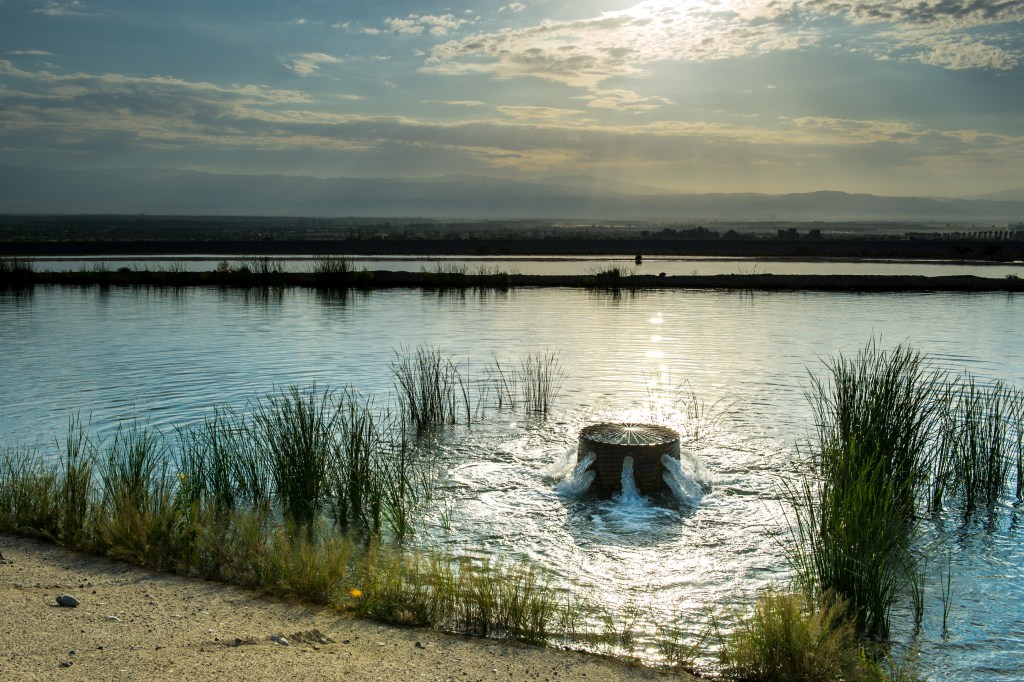
Photo by DWR
Pumping from a pond uses much less energy than pumping groundwater.
Benefits
Ponds can provide the following benefits in addition to the provision of irrigation water.
Ponds are commonly used on ranches for stock watering. Cattle and horses require 12-15 gallons of water per day. Rather than allow the stock to drink directly from the pond, a more environmentally friendly innovation is to fence the pond and use solar pumps to move water into troughs for the cattle.
Ponds are often used for frost protection, particularly on wine grapes. The use of water for this purpose typically ranges from 0.4-1.6 inches of water in a year. There has been an effort on the north coast to take water from abutting streams in the winter and put it into ponds in order to avoid pumping from the streams for frost protection, something that has affected streamflows and stranded fish in the past.
Ponds can be managed to provide wildlife habitat. Although any pond will attract waterfowl, a number of RCDs, Audubon California, and other organizations have been working with farmers to plant native habitat around farm ponds. Researchers are also exploring the use of such ponds to re-introduce native fish species, for example an effort to raise threatened Sacramento perch in Yolo and Solano counties.
Ponds constructed primarily for fish production, typically at least a half-acre in size and a minimum depth of 8 feet, can yield 100-300 pounds of fish per year for each acre of water surface.
Ponds can assist in flood control by capturing and slowing the flow of water through a watershed. Particularly as climate change leads to greater storm flows, a distributed network of ponds could play an important role in attenuating peak flows and reducing flooding.
Ponds help recharge groundwater. Whether filled with water diverted from a stream or with tailwater from irrigation, clay-lined ponds seep water into the ground at highly variable rates (anywhere from 500-10,000 gallons/day depending on size and construction), but typical seepage loss from a well-sealed pond is estimated at one foot of water per year. Every acre of pond would thus on average recharge groundwater with one acre foot—or 325,000 gallons—of water a year.
Storing water captured from rainfall or from tailwater in on-farm ponds can also reduce energy use by displacing pumped groundwater. Even if ponds are used to store pumped or delivered water, there can be a cost savings associated with energy. During the summer months when energy costs are the highest, having on-farm water storage also allows you to pump groundwater during the off-peak times (like at night) when electricity is cheapest and the electric grid is not constrained, rather than pumping during the most expensive and on-peak periods.
Ponds at least one acre-foot in size can serve as water sources for fire protection if they are sited in proximity to structures.
Ponds can be used to settle and filter farm runoff, capturing soil that can be returned to fields and filtering pollutants and particulates that would otherwise negatively impact the broader ecosystem.
A more localized and distributed water supply can offset water transported from distant reservoirs, reducing the energy needed for water conveyance.
Ponds act to slow the flow of water through the basin, allowing more of it to be retained for use.
Featured Pond Resources
USDA NRCS Pond Standard
Learn the differences between embankment ponds and excavated ponds with the USDA NRCS Pond Standard, including pond design, construction guidance, water management, and conservation practices.
Sonoma Cooperative Extension Pond Management Resources for Farm Ponds and Aquaculture
Explore Sonoma Cooperative Extension pond management resources covering farm ponds, aquaculture, fish stocking, water quality, habitat improvement, and sustainable pond stewardship practices.
Managing for Wildlife Habitat on Rangeland: Conservation Planning in Action (Video)
In this NRCS video, learn how wildlife habitat management and conservation planning on rangelands support sustainable agriculture, biodiversity, soil health, and long-term environmental stewardship.
Hill Ponds: Benefits for Landowners, Ranches, and Wildlife Habitat
Learn how hill ponds support ranch management, wildlife habitat, water conservation, and sustainable land stewardship through thoughtful pond design and habitat-focused management practices.
Farm Ponds: Supporting Water Management, Wildlife, and Sustainable Agriculture
Learn how farm ponds support water conservation, wildlife habitat, erosion control, and sustainable agriculture through proper pond management and environmental stewardship practices.
Conservation Planning: Building Sustainable Solutions for Agriculture and Natural Resources
Learn in this video how conservation planning helps farmers and landowners improve soil health, water conservation, and sustainable land management through USDA NRCS conservation practices.
Something went wrong. Please refresh the page and/or try again.