
Nutrient Management
On this page: Nutrient Budgeting | Nutrient & Irrigation Management | Featured Resources
Nutrient management is among the most consequential decisions that a grower makes with respect to water quality and crop productivity. Because crops do not take up fertilizer with 100% efficiency, many growers apply organic and inorganic fertility in excess of crop demand to ensure that nutrients are not limiting to their crops.
While this is often an economic decision, adding excess nutrients to the crop-soil system also creates an opportunity for nutrient losses from farms into the surrounding environment. One major loss pathway for excess nutrients is via nutrient-enriched water that drains from the surface of agricultural fields or percolates beyond the root zone of the crop and into groundwater storage. Nitrogen (N) and phosphorus (P) are generally the most limiting nutrients to crop growth, and are, therefore, added in the greatest quantities by growers and most frequently the nutrient constituents of concern in agriculturally connected waterways and aquifers. When present in excess, nitrates and phosphates can create environmental problems such as eutrophication of waterways, algal blooms, and contamination of drinking water. Recent research in the Tulare Basin and Salinas Valley has found that nitrate pollution of groundwater supplies is widespread and overwhelmingly the result of the agricultural activities in the area over the past six decades. As a result of this study, new regulations on N management have been introduced and are being phased-in throughout the state. The objectives of these regulations are to maintain crop productivity while also reducing environmental pollution due to the over-application of plant nutrients.
Fortunately, managing nutrients to optimize crop growth and water quality are not mutually exclusive. Applying the Right Amount of fertility, at the Right Time, to the Right Place, in the Right Form (4Rs) is likely to maximize the amount of fertilizer that is taken up by the crop and minimize the amount of fertilizer that is wasted or lost to the environment. Since the application of fertilizers is generally one of the highest input costs in agricultural systems, this approach saves farmers money while reducing their environmental footprint in surrounding bodies of water. However, such best management practices (BMP) tend to be highly specific to the crop and environment where they are applied. Further, they involve not only management of the nutrients themselves, but also the interaction of the nutrients with water that is added to the crop-soil system (whether via irrigation or rainfall). Therefore, BMP should be governed by a few fundamental principles, but adapted to the particular cropping context where they are applied. The objective of this practice page is to outline several of the key principles for managing nutrients to maintain water quality without sacrificing crop productivity. Also included are links to resources that will assist in better understanding and implementing BMP as well as links to case studies that exemplify context-specific applications of BMP.
Fertilizer is only as good as the soil and water system it moves through—management makes the difference.

Nutrient Budgeting (4Rs)
Right Amount
Budgeting is fundamental to BMP for nutrients. First, the budget must take into account the amount of nutrients a grower expects the crop to take up and, subsequently, leave the system in the crop biomass. This amount will vary among crop species as well as among levels of productivity within the same species. For example, a corn crop that yields 100 bushels/acre (5600 lbs) will export (meaning that nutrients leave the field in the harvested portion of the plant) approximately 80 lb/acre of N in the grain and 60 lb/acre of N in the stover (which is above-ground biomass that is not grain and includes stalks/stems and leaves). If the corn crop were to yield 80 bushels/acre, those numbers would be reduced by 20%. Compare that with an iceberg lettuce crop that yields 40,000 lb/acre. This will export approximately 80lb/acre of N from the field, all in the above-ground biomass (since the whole above-ground portion of the plant is harvested). How does one figure such numbers out? There is information available for prominent crops via extension services and other online tool. However, it is also possible to estimate these numbers by multiplying the concentration of a nutrient by the quantity of biomass that contains that concentration. (For example: Corn grain contains about 1.4% N at harvest. Therefore, for a 3 ton/acre crop, the amount of N leaving the field in the grain is 6000lb x 0.014 = 84lb/acre N.
In order to anticipate the amount of nutrients likely to be exported from the field in the crop biomass, a grower must consider in advance what a reasonable yield goal is for the crop s/he is growing. If the grower has had previous experience with the crop at the same location, this is often a good guide. Also, trying to get a general idea of typical yields for the crop and region in question can be an important step. This information might be gained by consulting with other growers, with a professional crop consultant, and/or a university extension agent, such as the UCANR Statewide Integrated Pest Management Program, the UC Vegetable Research and Information Center, and the UCANR Soil Fertility Management Guide for Fresh Market Tomato and Pepper Production. It is important that the yield goal not be a “yield wish”. Fertilizing for a crop yield that is not attainable in a given context (due to inherent biophysical and/or management constraints) is a very easy way to over-budget the fertility needed and create an opportunity for nutrient pollution in connected water bodies.
No crop will use fertilizers with 100% efficiency. In fact, 60-70% efficiency is generally as good as can be accomplished, and many of the most common crops grown in California are estimated to have much lower average efficiencies. The reasons are that 1) plants are often in competition for nutrients with the micro-biota in the soil and 2) nutrient losses via the movement of water and gas are an inherent part of a dynamic, productive biological environment. However, applied fertility that goes unused by a given crop can still be incorporated into the plant-soil system by using cover crops, rotating with crops that have distinct root systems and nutrient uptake patterns, and by other management practices that are soil building. A fertile soil with a high nutrient supplying capacity can compensate for a fertilizer deficiency in the short to medium-term. Conversely, a less fertile soil may require more applied nutrients than the above ground portion of the crop will use in order to account for the fertilizer use inefficiency and the low nutrient supplying capacity of the soil. For this reason, soil fertility testing is an important part of determining the right amount of nutrients to add. However, interpretation and application of soil tests varies greatly from crop to crop and across environments.
Fertilizing for a crop yield that is not attainable in a given context… is a very easy way to over-budget the fertility needed and create an opportunity for nutrient pollution in connected water bodies.
Right Time
Pre-plant applications of fertilizer are the most common approach to nutrient management. There are both biological and logistical reasons for this. Biologically, it is important that the crop receive adequate nutrition early in its growth, when its yield potential is being determined.
Logistically, pre-season applications can be accomplished in concert with seeding and/or other field operations, reducing the number of passes in a field, which saves time and energy. However, the pattern of nutrient uptake by the crop changes over the course of the season based on how big the crop is and how fast it is growing. Because the absolute demand for nutrients by the crop is small early in the season, applying enough nutrients for the entire crop at the beginning of the season results in a large portion of those nutrients being available and mobile in the soil prior to the time when the crop can take it up. As water moves through the system, these nutrients can move beyond the zone of use for the crop [whether via surface losses or downward (leaching) losses] and become a water quality concern. One way to avoid these losses is by splitting the application of fertilizers into smaller portions that are applied at key points in the development of the crop. Depending on the crop and irrigation system, there are economic and logistical limitations to how many applications are possible and warranted. Yet, even two applications can greatly improve the fertilizer use efficiency compared to a single application.
Right Place
In addition to timing and quantity, the location of fertility additions to the soil profile will determine how efficiently they are used. N can be added in ammonium, nitrate and organic forms. In the soil system, these forms are dynamic, and the vast majority of plant N uptake is in the nitrate form, which is highly mobile in the crop-soil system.
The degree of N mobility depends on the soil type, the amount of soil organic matter and carbon present, and, importantly for in-season management, the degree to which the water inputs exceed the water demands of the crop. Therefore, in the irrigated cropping systems that predominate California agriculture, managing the supply of water to match crop demand is the most important tool for optimizing the placement of N in the crop-soil system (see Interaction with Water, below). Unlike N, phosphorus in the phosphate form is generally not mobile downward through the soil profile. It can, however, be lost via the surface movement of water, particularly in soils with low P-fixing capacities or where soil sediment is lost as runoff (because P binds strongly to soil particles). To reduce surface losses of P, placing or incorporating P fertilizers (or organic fertilizers high in P content such as poultry manure) far enough into the soil profile that they are less likely to be lost to the horizontal movement of surface water but still available to the roots of the crop is an important measure. The optimal depth for incorporation will depend on the rooting depth(s) of a given crop at the time(s) when the demand for P is critical to its growth and development. If runoff from the crop-soil system is inevitable, establishing vegetation buffers and tailwater ponds on the borders of the cropping area can help to uptake and recycle the excess nutrients before they reach connected waterways.
Right Form
The form of fertility will determine how quickly nutrients will become available as well as the cost of fertilizer. Because BMPs for this component of the 4Rs tends to be affected not only by the crop and environmental conditions but also by local, regional and global economic conditions, an understanding of the particular types of fertilizers available in a grower’s area should be integrated into his/her crop planning process.
Because of the large number of inorganic fertilizer formulations, no summary will be attempted here. These fertilizers are designed to become available more gradually over the course of the season to better match crop demand, improve use efficiency, and reduce losses to the surrounding environment. However, these fertilizers cost more for the same amount of nutrition, and in the irrigated context of California, control over the availability of nutrients can generally be more precisely and inexpensively accomplished via integrated irrigation and nutrient management.
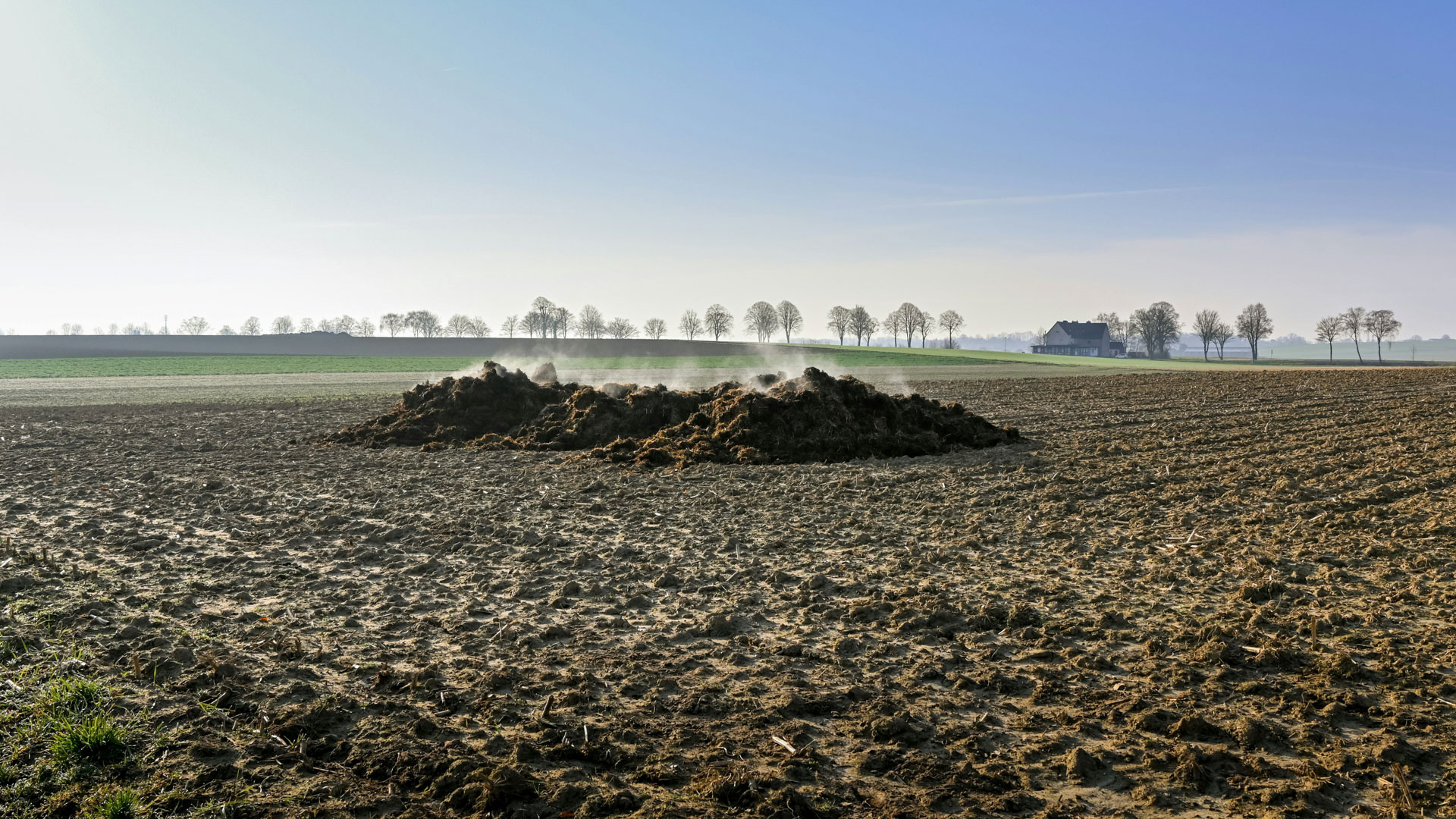
Unlike inorganic forms of fertility, organic fertilizers such as manures have more variable nutrient contents that are subject to changes over time and according to the environmental conditions. One positive aspect with respect to water quality is that nutrients from organic sources tend to be made available in a ‘slow release’ manner as decomposition gradually occurs. However, how much of the fertility will be available to the crop and when it will be available are less predictable with organic forms. As a result, some of the strategies mentioned above that increase nutrient use efficiency, such as splitting applications over the course of the season, cannot be applied with the same degree of precision using organic nutrient sources. Also, since crop production systems tend to be limited by N, organic nutrient sources are often added to meet crop N demands. However, crop demand of N is generally 10 times the demand for P, yet, in many manures, the N:P ratio is closer to 1:1 than 10:1. As a result, over-application of P and the potential for phosphate pollution is high when using manures for fertility in sufficient quantities to meet crop N demands. Likewise, when manures are applied to a field in large quantities pre-plant in order to meet crop demand for the entire season, there is much time and opportunity for losses via runoff and percolation as pulses of nutrients are released from the manure that may not match crop demand. Therefore, organic sources of fertility, and manures in particular, need to be managed with extra care.
Implementing the 4Rs for nutrient management will encourage the efficient use of applied nutrients in any cropping system. The more efficiently the cropping system uses applied nutrients, the fewer nutrients will be lost, and the better the environmental and economic outcomes will be for the grower and the surrounding environment.
Nutrient & Irrigation Management
The majority of California’s crops are irrigated. Because the timing, placement and quantity of water affect the availability and movement of nutrients through the crop-soil system, irrigation management and nutrient management should be considered together. Over-irrigating, or adding more water than the crop demands, is a common practice because crops are often grown on fields that have heterogeneous percolation of water and irrigation systems that do not deliver water with perfect uniformity.
Since water is the most limiting abiotic (non-living) factor to plant growth, over-irrigating will ensure that in-field heterogeneity is overcome and that the crop is not water-limited. However, because the movement of nutrients is facilitated by water movement, over-irrigating can also lead to nutrient loss via leaching and runoff. Nutrients that are lost from the root zone or never make it there can reduce crop productivity and/or increase fertilization requirements. Nitrates that accumulate below the rooting zone of the crop eventually accumulate in groundwater via rainfall and subsequent irrigation and become a source of pollution. Likewise, nutrients lost to runoff accumulate in waterways and disrupt the balance of river ecosystems. Therefore, managing irrigation to match crop demand will ensure not only efficient water use, but efficient nutrient use and environmental protection as well. A promising example of this is the rapidly growing use of subsurface drip irrigation in tomatoes and other irrigated crops. In such systems, multiple applications of nitrogen can be easily and economically applied along with the irrigation water (known as fertigation) to match the crop demand as it changes across the season. This can result in very high nutrient use efficiency and overall productivity because the availability of the nutrients and water are synchronized with the plant demand and are available in the same location.
Page Credit
Content for this page was originally developed by Dr. Mark Lundy, UC Cooperative Extension. Various others have since contributed content.
Featured Nutrient Resources
UCCE Agricultural Water Quality Research and Education Program
Explore the UCCE Agricultural Water Quality Research and Education Program and learn how research-based farming practices help protect water quality while supporting sustainable agriculture in California.
CropManage: Smarter Irrigation and Nutrient Management for Leafy Green Growers
Discover CropManage, the UC ANR online irrigation and nutrient management tool helping leafy green growers improve water efficiency, fertilizer use, and sustainable farming practices.
California Nitrogen Management Training Resources for Sustainable Agriculture
Explore research-based nitrogen management training resources from the California Institute for Water Resources and UC Agriculture and Natural Resources to improve fertilizer efficiency and sustainable farming practices.
California Fertilization Guidelines: Smarter Nutrient Management for Healthier Crops
The California Fertilization Guidelines from CDFA and UC Davis help growers improve crop nutrition, reduce waste, and protect water quality across California.
UC Cooperative Extension
Find your local UC Cooperative Extension offices for help California farmers improve irrigation efficiency, water management, and sustainable agriculture through science-based research and local expertise.
Cover Crop Innovator Video Series (SARE) (Video)
Explore SARE’s online cover cropping resources for practical guidance on soil health, water conservation, erosion control, crop rotation, and sustainable farming practices.
Something went wrong. Please refresh the page and/or try again.
Photo Credits: Mirko Fabian and Lorna Pauli