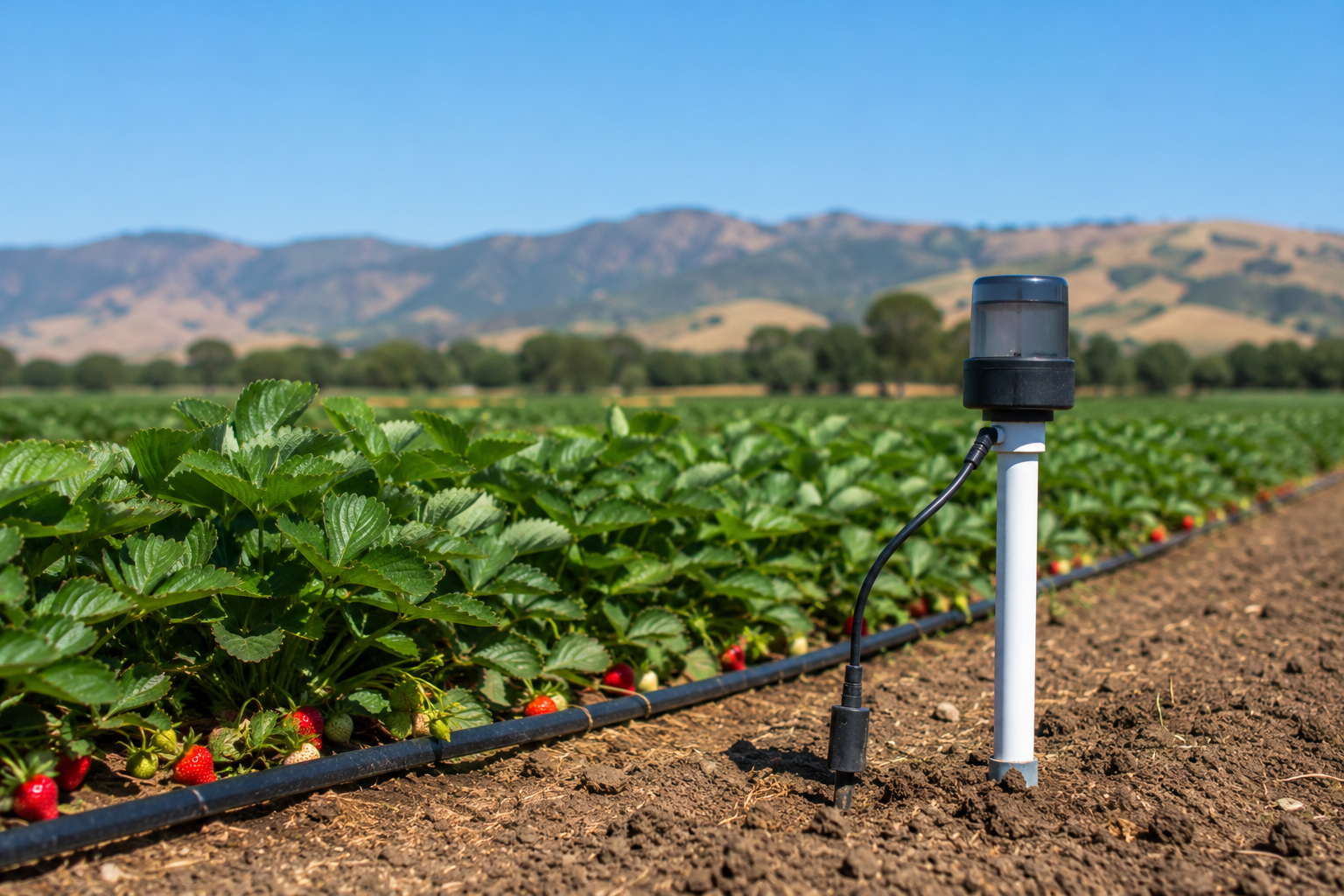
As water conservation becomes increasingly important in agriculture, growers are turning to precision irrigation technologies that help maximize efficiency while maintaining healthy crop production. Reiter Berry Farms, featured in the Ecological Farming Association’s Water Stewardship video series, has pioneered a tension-based irrigation monitoring system that has successfully reduced water use by approximately 30 percent.
Tension-based irrigation systems work by monitoring soil moisture tension, which measures how hard plant roots must work to pull water from the soil. Instead of irrigating on a fixed schedule, growers can use real-time soil data to determine exactly when crops need water and how much should be applied.
This technology allows irrigation to be more precise and responsive to actual field conditions. By avoiding unnecessary watering, farms can significantly reduce water waste while still supporting healthy plant growth and crop yields.
For berry production and other high-value crops, efficient irrigation is especially important. Overwatering can lead to nutrient loss, disease pressure, and wasted energy, while underwatering can stress plants and reduce production quality. Precision monitoring systems help strike the right balance between crop health and resource conservation.
Reducing water use by 30 percent also creates additional environmental and economic benefits. Lower irrigation demand can reduce energy costs associated with pumping and water delivery while helping conserve groundwater and surface water supplies during drought conditions.
Innovative systems like the one used at Reiter Berry Farms demonstrate how technology and sustainability can work together in modern agriculture. Precision irrigation not only improves efficiency but also helps farms become more resilient in the face of climate variability and increasing pressure on water resources.
As California agriculture continues adapting to changing environmental conditions, tools that improve water management will play a critical role in supporting long-term sustainability.
Smart irrigation practices help protect water resources while supporting productive farms, healthy soils, and resilient food systems for the future.