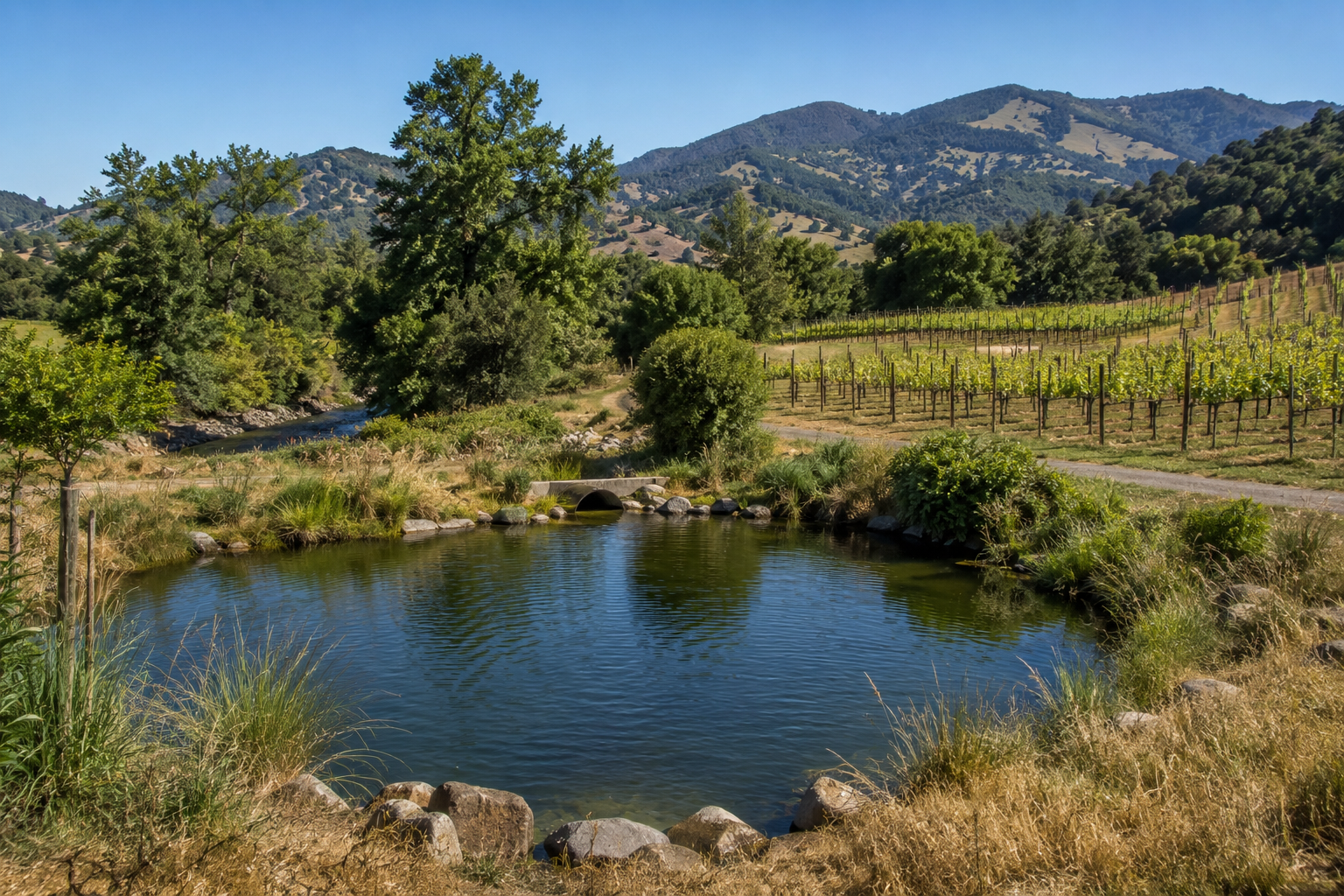
Protecting rivers and fisheries while supporting successful agriculture requires collaboration, innovation, and long-term stewardship. The Water and Wine brochure highlights how Trout Unlimited works alongside landowners, grape growers, and government agencies to restore streams and improve habitat for salmon and steelhead across California wine country.
The initiative focuses on reducing the environmental impacts of summertime water withdrawals from sensitive streams that support critical fish spawning and migration habitat. During dry seasons, low stream flows can place additional stress on salmon and steelhead populations, particularly in watersheds already facing drought and climate-related pressures.
One important strategy highlighted in the brochure is the installation of farm ponds and off-stream water storage systems for vineyards and agricultural operations. By capturing and storing water during wetter periods, growers can reduce the need to withdraw water directly from streams during critical summer months when fish are most vulnerable. These water storage projects help balance agricultural needs with ecosystem protection and stream restoration goals.
The brochure also describes collaborative efforts to improve watershed health through habitat restoration, streambank stabilization, erosion reduction, and conservation planning. By working together, conservation organizations, growers, and agencies can create practical solutions that support both thriving agricultural communities and healthier aquatic ecosystems.
The partnership model presented in Water and Wine demonstrates how sustainable agriculture and environmental stewardship can successfully coexist. Vineyard owners and farmers play an important role in watershed conservation, especially when supported by technical expertise, restoration planning, and conservation-focused infrastructure improvements.
In addition to protecting fisheries, water storage and stream restoration projects often improve long-term water reliability, enhance biodiversity, and contribute to healthier landscapes across rural regions.
As water management challenges continue affecting California agriculture and ecosystems alike, collaborative stewardship efforts such as these provide an encouraging example of how conservation and farming can work hand in hand.